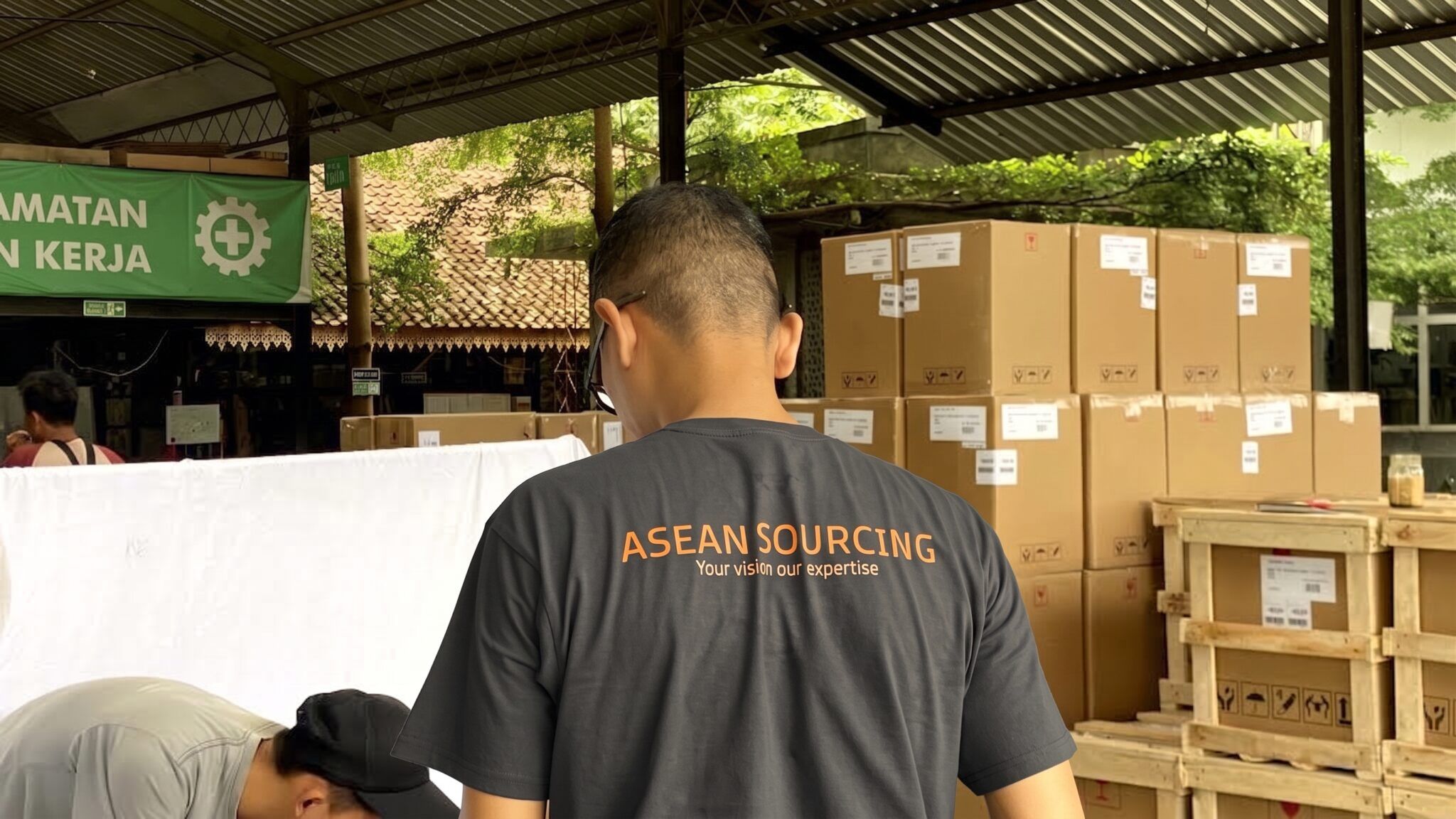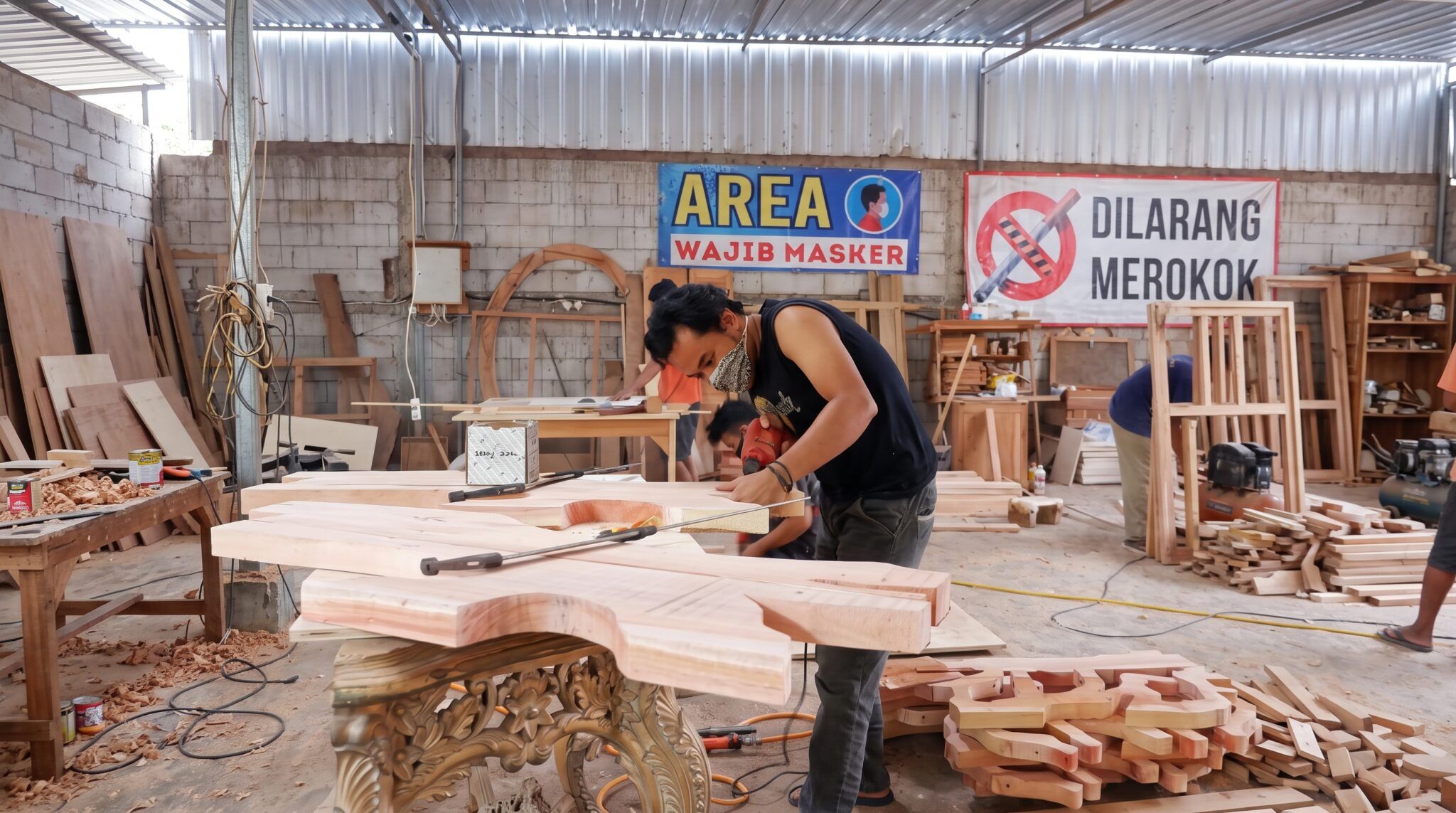
You see the finished room. Here’s everything that happened before it got there.
How do you vet a furniture factory for a hotel or villa project? You test three things, in order: can the factory do the work, will it build to your approved standard, and does what it built match what you approved. Skip one, and the problem shows up on your site instead of in the workshop.
At Asean Sourcing, that sequence is our 3-stage factory qualification and QC process. It runs before, during and after production on every FF&E and OS&E order we manage across Asia. Here is how it works, and what you actually receive at each stage.
Why Most Furniture Problems Start Before Production
A late container or a finish that doesn’t match the sample rarely begins on the loading dock. It usually begins earlier: a factory that took on more orders than it can handle, a sample that was approved but never documented, or a process quietly outsourced without telling the buyer.
Picture a boutique hotel ordering 120 bedside tables. The sample looked right. Nobody wrote down the finish or the hardware spec, and nobody inspected mid-production. The bulk order arrives a shade darker with different drawer runners. Nothing was “wrong” with the factory’s craftsmanship. The process simply had no checkpoint.
These are procurement risks, not craftsmanship problems. They can be caught, but only if someone checks at the right moment. That is what the three stages are for.
Why You Don’t See the Factories, and Why That Works in Your Favour
As a principal supplier, Asean Sourcing holds one contract with you and carries the accountability for what is delivered. Our manufacturing network stays confidential, so you deal with one party, not a chain of intermediaries.
That also changes how seriously we vet. If a factory fails, it is our problem before it is yours. What you see is the evidence: approved samples, inspection photos, measurements, and updates on production, quality and compliance.
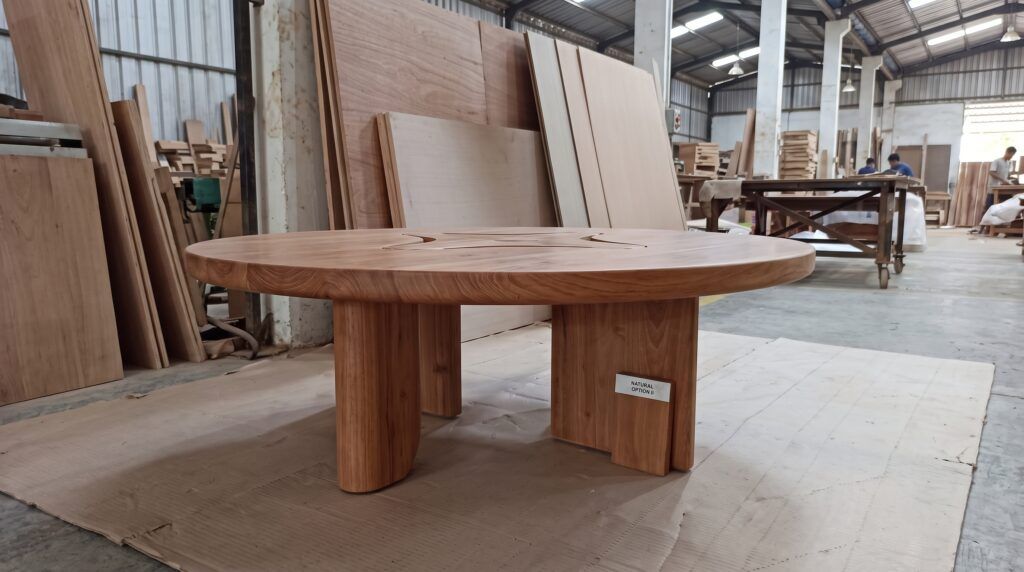
Stage 1: Factory Qualification. Can This Factory Do the Job?
No order is placed until a factory passes qualification. We look at:
- Capacity versus workload. Can they deliver your volume and deadline alongside the orders they already carry?
- In-house versus outsourced. Which steps (joinery, finishing, upholstery, packing) happen under their own roof, and which are subcontracted?
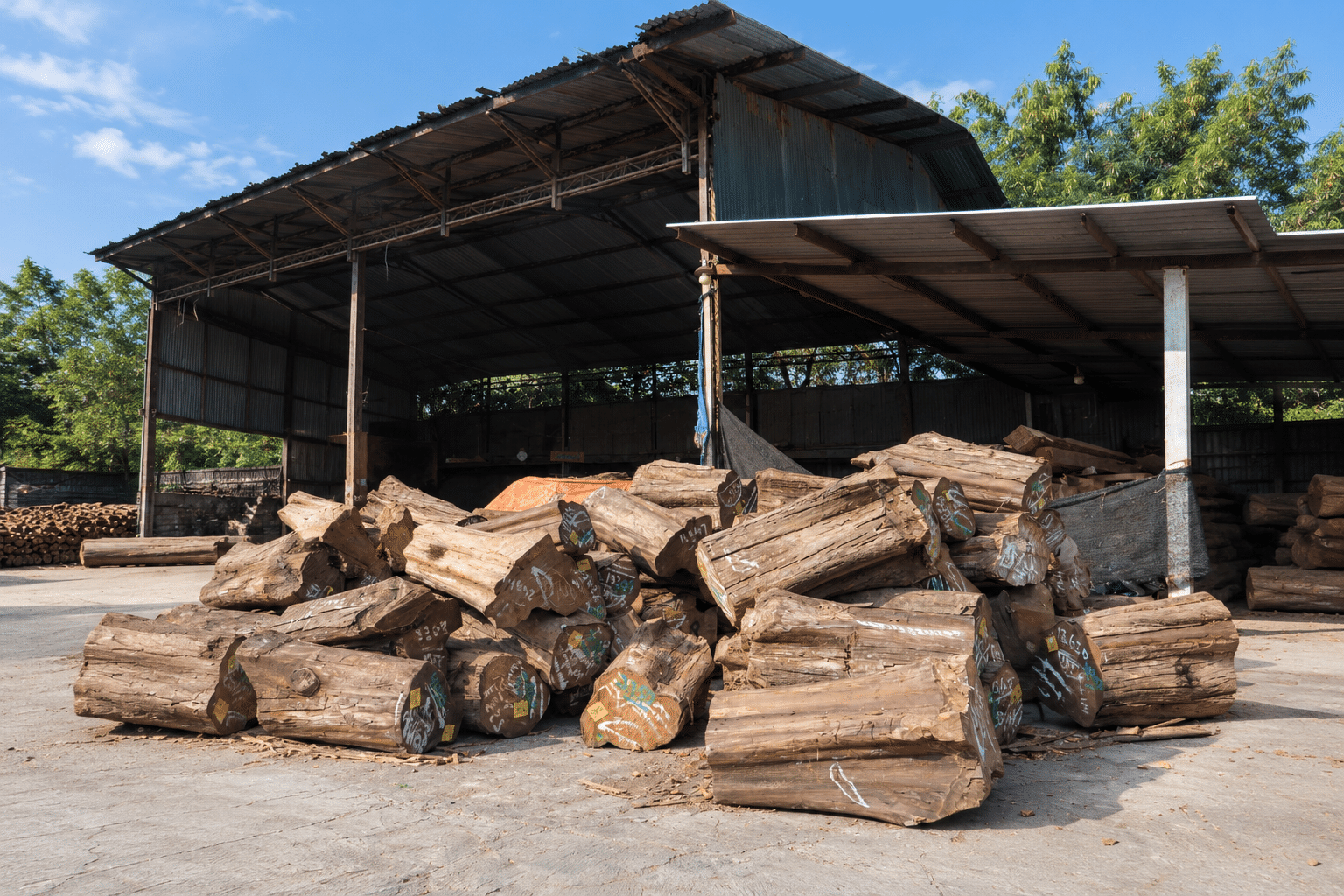
- Material and timber documentation. Legal-origin papers for wood, such as SVLK for Indonesian timber, and traceability for other materials. This matters more every year for EU-bound shipments. See our guide to EUDR compliance for furniture importers.
- Workshop standards. Finishing-room conditions, measuring tools, material storage, and a dedicated QC person rather than just the owner’s eye.
- Relevant track record. Experience with export and commercial-grade work, not only local retail.
- A trial piece. Before a real order, the factory builds a real piece to our spec.
A factory that can’t show these doesn’t move to Stage 2.
Stage 2: Sample and Pre-Production Approval. Lock the Standard.
Most “the bulk doesn’t look like the sample” disputes happen because the sample was never locked as the standard. Before production starts, we:
- Approve the sample against the drawing or spec, then document it with measurements, finish, materials and hardware.
- Keep the approved sample as the reference for every later inspection.
- Confirm material specs before cutting begins: wood condition, fabric and foam, hardware, finish swatches.
- Write project requirements into the order, such as fire-retardant fabric, load requirements or finish durability for commercial use.
- Agree packing method and timeline in writing.
When the standard is fixed on paper, “close enough” stops being an argument.
Stage 3: In-Process and Pre-Shipment Inspection. Check It Before It Ships.
Finding a problem in week three of production costs a conversation. Finding it in the guest room costs the opening date.
- In-process checks. We inspect during production (joinery, sanding, finishing) so issues are corrected while they are still cheap to fix.
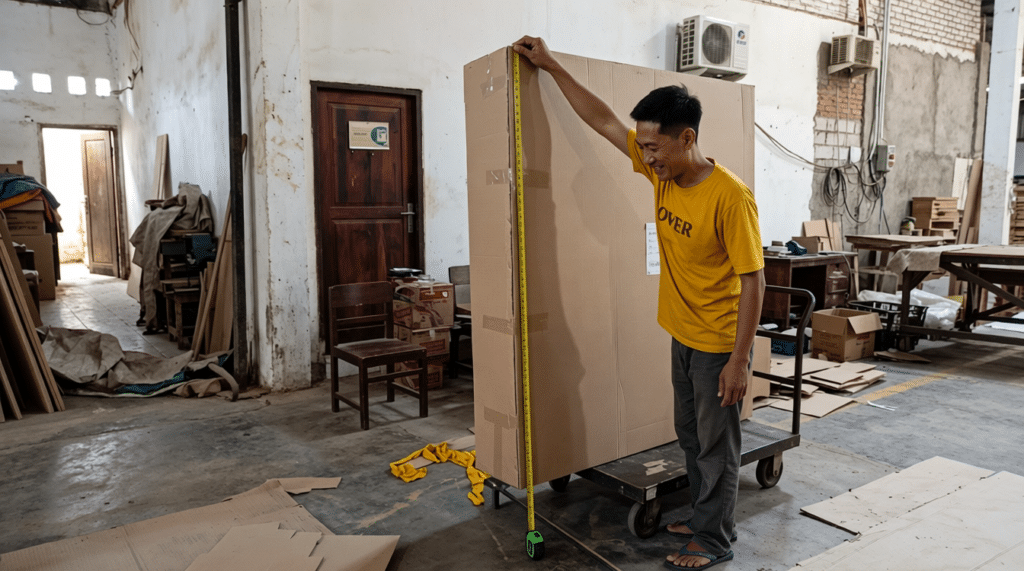
- Pre-shipment inspection. Before goods are packed, we check a sample of the order against the approved reference: dimensions, finish consistency across pieces, hardware function, labelling and quantity.
- Packing and loading. Export packing is checked against the agreed method, because transit damage looks like a quality failure from your side of the table.
Every inspection ends with a report, photos and measurements, not a verbal “it’s fine.”
What You Receive at Each Stage
| Stage | What we check | What you receive |
|---|---|---|
| 1. Qualification | Capacity, in-house processes, documentation, workshop standards | Confirmation the factory has passed before your order is placed |
| 2. Sample and pre-production | Sample against spec, materials, finish, packing | Approved sample record with photos and specifications |
| 3. In-process and pre-shipment | Dimensions, finish, hardware, packing, quantity | Inspection report with photos and measurements |
How This Protects Different Project Types
- Hospitality procurement and hotel owners: consistency across rooms and floors, and delivery that holds to your opening schedule.
- Architects and interior designers: the finish, proportions and materials you specified are the ones installed.
- Residential project managers and villa developers: every unit in a batch matches the first, so the tenth villa doesn’t look like a different project.
5 Questions to Ask Any Sourcing Partner About Factory Vetting
- Who qualifies the factory, and what do they check before the first order?
- Is the approved sample documented and kept as the reference for bulk production?
- When do inspections happen: during production, or only at the end?
- What evidence will I receive after each inspection?
- Who is accountable if something fails: one party or several?
We turned these questions into a one-page checklist you can use on any supplier, ours included.
Not sure which stage matters most for your project? Message us, we’re happy to talk it through.
FAQ
How do you vet a furniture factory before placing an order?
Check capacity, in-house processes, material documentation, workshop standards and relevant export experience. Then test the factory with a sample before committing to bulk production.
What is the difference between a factory audit and a QC inspection?
A factory audit judges whether a factory is capable and reliable before you order. A QC inspection checks the specific goods in your order, during and after production. You need both.
Why does bulk production sometimes look different from the approved sample?
Usually because the sample was never documented as the standard, or nobody inspected during production. Locking the sample and checking mid-production prevents most of it.
Which products does this process cover?
Finished furniture and home décor for hospitality, villa and residential projects, including FF&E and OS&E. Asean Sourcing sources finished products, not raw materials.
Related posts
EUDR and Furniture: What Every Importer Should Know Before December 30, 2026
If you ask whether a new EU regulation is something a furniture buyer needs to pay attention to, mos …

Total Cost of Ownership: The FF&E Math Most Project Owners Skip
Every hospitality or residential project owner budgets for opening day. The mood boards are approved …