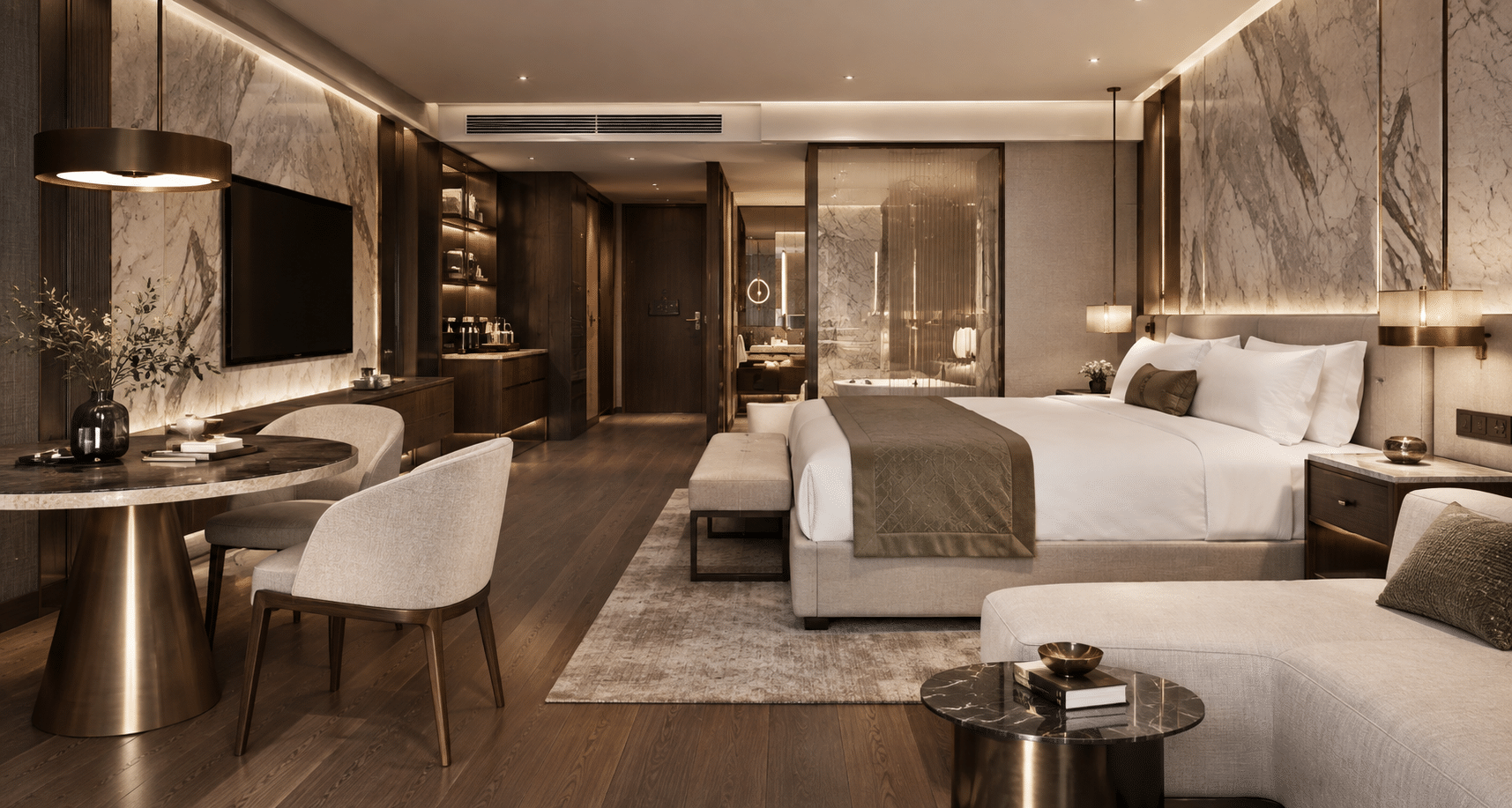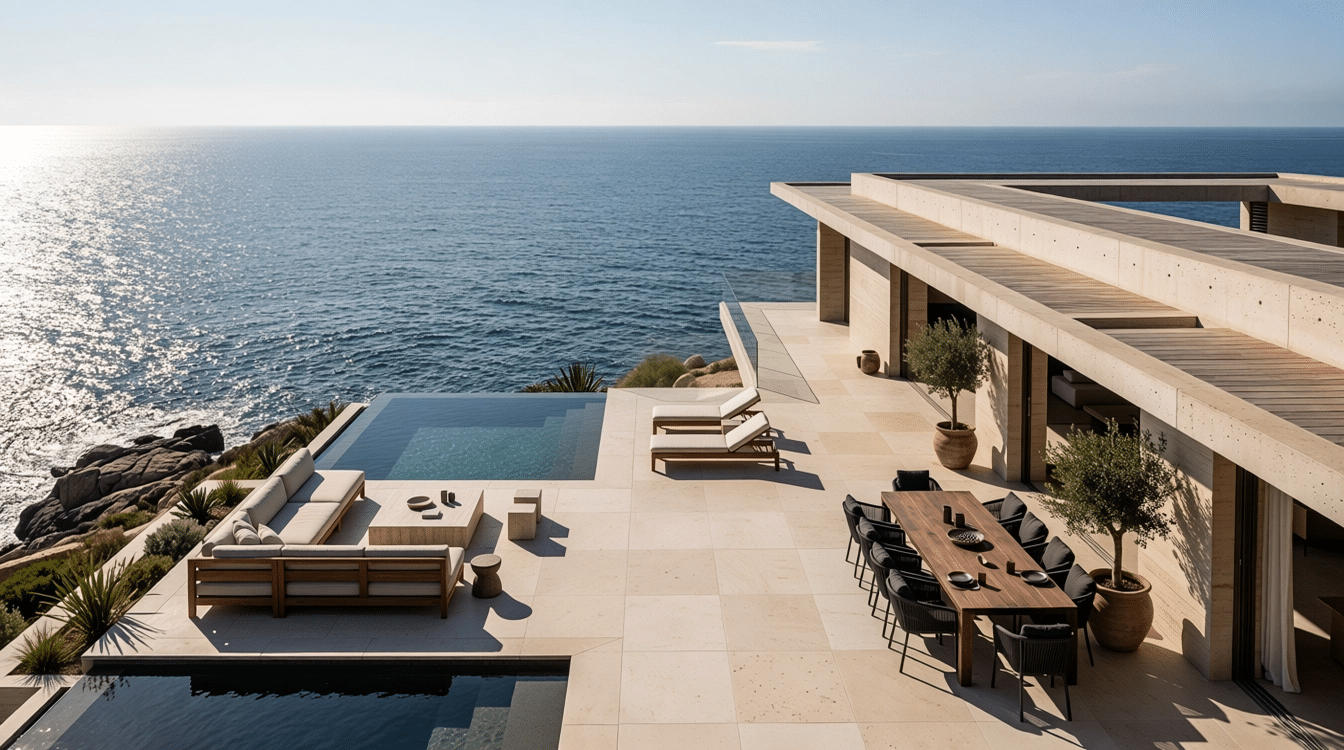
A beachfront property tests furniture in ways an inland hotel never will.
Salt in the air, hours of direct sun and humidity that never really drops all work on a piece at the same time, and they find the weak point fast. For hotel owners, procurement teams, architects, designers and project managers, that weak point becomes your problem: a chair that looked perfect as an approved sample shows rust streaks, faded cushions or loose joints within a season, and it is your project, your budget and your guests or residents who feel it.
The good news is that most coastal failures are specification failures, not bad luck. This guide covers coastal hotel furniture the practical way: the four parts of a spec that coastal conditions test first (Frame, Finish, Fixings and Fabric) and the questions to ask before you approve a spec or place an order.
“Outdoor-rated” is not “coastal-rated”
Many spec sheets say “outdoor-rated” and stop there. That label fits a covered patio in a dry inland city just as well as a terrace fifty metres from the surf. It tells you very little about what a beachfront property will actually throw at the furniture.
Coastal sites stress furniture in three ways at once:
- Salt attacks metal, which is why corrosion usually starts at joints, edges and hardware.
- Sun fades colour, chalks finishes and cooks fabrics and foam.
- Humidity feeds mildew, moves wood and keeps cushions damp.
So the first rule is simple: name the environment in the spec from day one. “Beachfront, direct salt air, full sun” is a specification. “Outdoor” is not.
The 4 parts of a coastal furniture spec
1. Frame: what the piece is built on
The frame decides how long everything else gets to matter. Common choices for furniture for coastal hotels, resorts and villas include:
- Aluminium: light, does not rust like steel, and a popular choice for loungers and dining sets. Quality varies, so check the alloy, wall thickness and weld quality.
- Teak and dense hardwoods: naturally oily and strong outdoors when properly dried and well jointed. Ask about moisture content and how the end grain is sealed.
- Stainless steel: grade 316 is the usual choice for salt air. Lower grades can show surface staining near the sea.
- Coated steel: can work, but only with full protection, and cut ends and welds are where it fails first.
Ask: what material and grade is it, and how are the welds finished?
2. Finish: the first line of defence
A finish is not just colour. On metal frames, powder coating is the barrier between salt and bare metal, and it is only as good as the preparation underneath it.
- Ask about pre-treatment (cleaning and conversion before coating). It is what makes the coating stick.
- Check coverage on edges, tube ends and welds, where thin coating fails first.
- Ask for salt-spray test results for the finish system, such as hours achieved under a recognised standard like ASTM B117.
- Think about colour: dark shades fade more visibly and get hotter in direct sun.
On timber, decide early whether the finish is oiled, sealed or left to weather to a natural silver-grey, and tell the owner. A natural look only becomes a complaint when it comes as a surprise.
3. Fixings: the small parts that fail first
Screws, bolts, nuts, hinges, glides and brackets are a tiny share of the cost and a large share of coastal complaints. Rust streaks running down an otherwise clean frame almost always start at a fixing.
- Specify 316 stainless steel for exposed fixings.
- Avoid mixing metals carelessly. Stainless fixings in an aluminium frame can cause corrosion around the fixing unless they are isolated with washers or coatings.
- Put the fixings list in the spec sheet. If it is not written down, it is easy to substitute.
4. Fabric: sun, salt air and a lot of moisture
Cushions, slings and canopies take the full force of the sun, then sit damp overnight.
- Choose solution-dyed fibres (such as solution-dyed acrylic or polyolefin), where colour runs through the fibre, for better fade resistance.
- For woven or synthetic rattan, check the UV stabilisation of the material.
- Specify UV-resistant thread. Weak thread splits seams long before the fabric looks tired.
- Choose quick-dry foam so cushions do not hold water after rain or pool splash.
- Look at zips, piping and webbing too. Each one is part of the fabric system.
Don’t forget humidity indoors
Coastal humidity does not stop at the terrace. Guest rooms, restaurants, lobbies and villa living areas near the sea deal with moisture too: veneers lift, joints move, and upholstery in poorly ventilated rooms can turn musty. If the property sits close to the water, run the same four questions on indoor furniture, just at a lighter level.
Coastal furniture spec checklist
Before you sign off a coastal specification, check that it states:
- The exposure: beachfront, near-coast or sheltered
- Frame material, grade and weld finishing
- Finish system, pre-treatment and test evidence
- Fixings material, written out
- Fabric fibre, UV stability, thread and foam type
- That the approved sample matches the production spec, and how pieces are packed for humid sea freight
How Asean Sourcing checks finished pieces before they ship
At Asean Sourcing, we work as your principal partner for finished FF&E and OS&E, not just a supplier. Procurement, production and delivery sit under a single commercial contract, with manufacturing across Indonesia, Vietnam, Malaysia and China.
For coastal projects, that means we build the spec around the same four parts (Frame, Finish, Fixings and Fabric) and check finished pieces against it before they ship, through a structured three-stage quality control process. Problems get caught on our side of the shipment, not at your property. Consolidated logistics then keeps pieces from different factories moving to you as one coordinated order.
Why this matters for your project
A clear coastal spec protects what your project is judged on: the budget, the design intent and the handover date. That means fewer early replacements, fewer warranty claims and no scramble to re-source pieces after the first wet season.
For hotel owners and villa or residential developers, it also protects the guest and resident experience. For architects and interior designers, it means what you drew is what arrives, and what lasts. For procurement teams and project managers, it gives you a spec you can defend when someone says “outdoor-rated” is enough.
FAQ
What is the best material for coastal hotel furniture? There is no single best material. Powder-coated aluminium, properly dried teak and 316 stainless steel all work when the rest of the spec supports them. A great frame with weak fixings will still fail.
How do I know if furniture is truly coastal-ready? Ask for the four parts in writing (frame, finish, fixings and fabric) plus test evidence for the finish. “Outdoor-rated” on its own is not enough.
Does humidity affect indoor furniture at beach resorts and villas? Yes. Wood moves, veneers can lift and upholstery can hold moisture in poorly ventilated rooms. The risk is lower than on a terrace, but it is real.
Do beachfront villas and residential projects need the same spec as hotels? The sea sets the spec, not the building type. Hotels usually see heavier daily use, but salt, sun and humidity act on a villa terrace in the same way. Specify the same four parts, then adjust for how hard each piece will be used.
Planning a coastal project?
Tell us the project type, how close it sits to the water and the pieces you need. We will help you turn that into a clear, testable specification.
Related posts
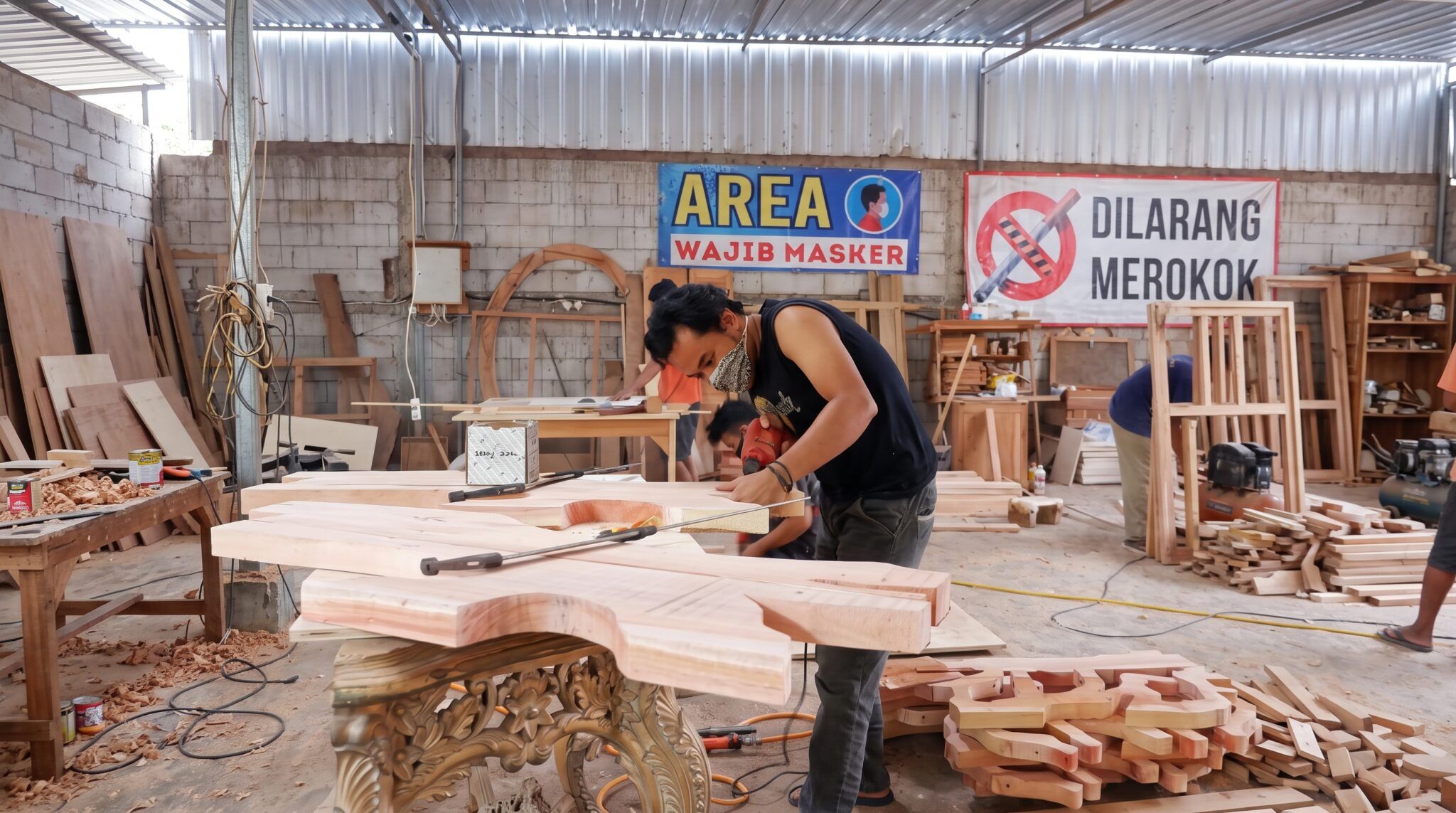
Behind Every Delivery: How We Vet the Furniture Factories You Never See
You see the finished room. Here’s everything that happened before it got there. How do you vet …
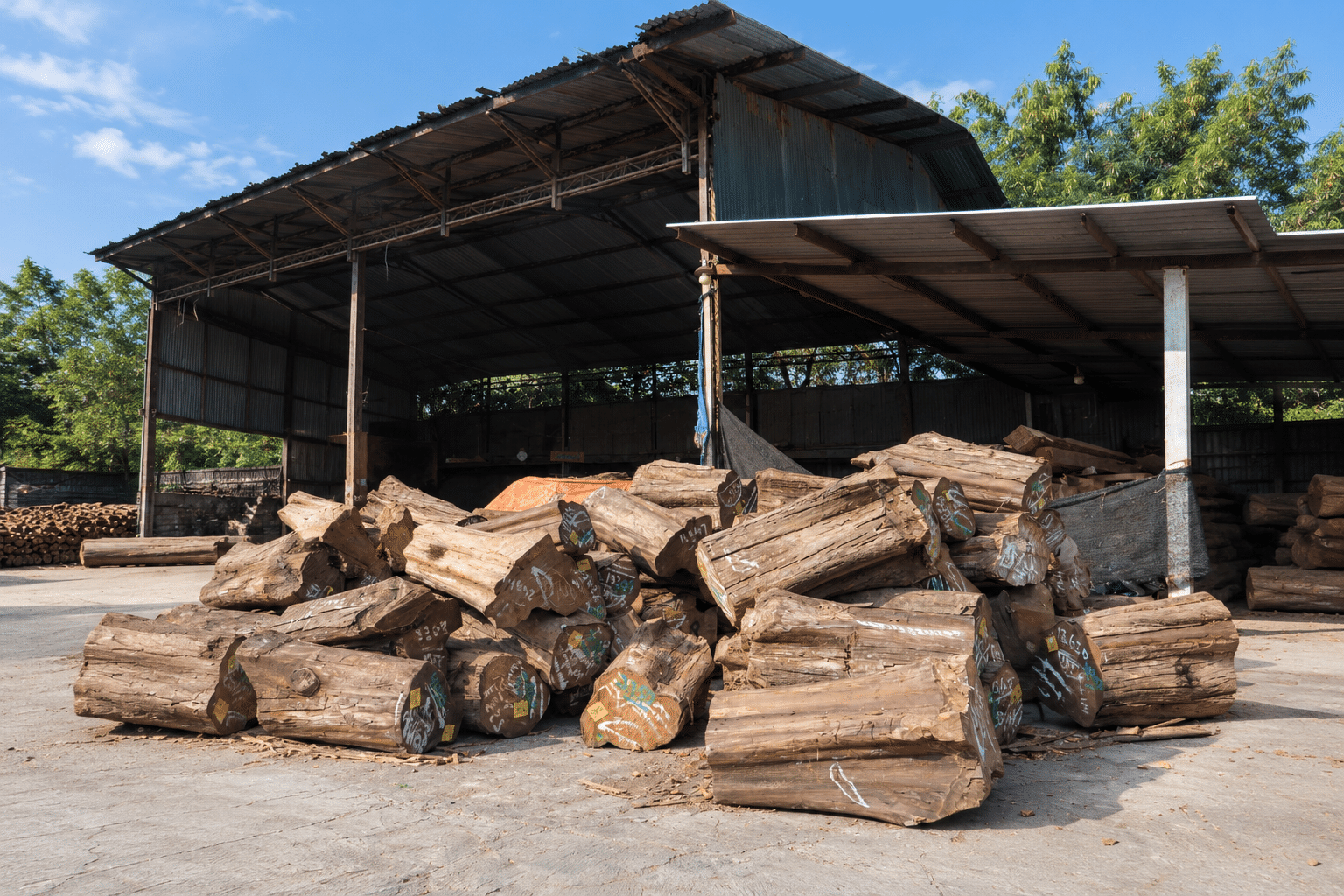
EUDR and Furniture: What Every Importer Should Know Before December 30, 2026
If you ask whether a new EU regulation is something a furniture buyer needs to pay attention to, mos …