Outdoor Furniture Materials, Durability & Climate Considerations
Some furniture is made to be admired. Outdoor furniture has another responsibility: to live comfortably beyond the first impression.
Sunlight, humidity, rain, temperature changes, and everyday use gradually influence how materials look and perform. For hospitality and residential projects, these conditions deserve a place in the design conversation from the beginning.
The question is not simply which material looks beautiful outdoors. It is which material makes sense for the environment it will live in.
The Environment Is Part of the Design
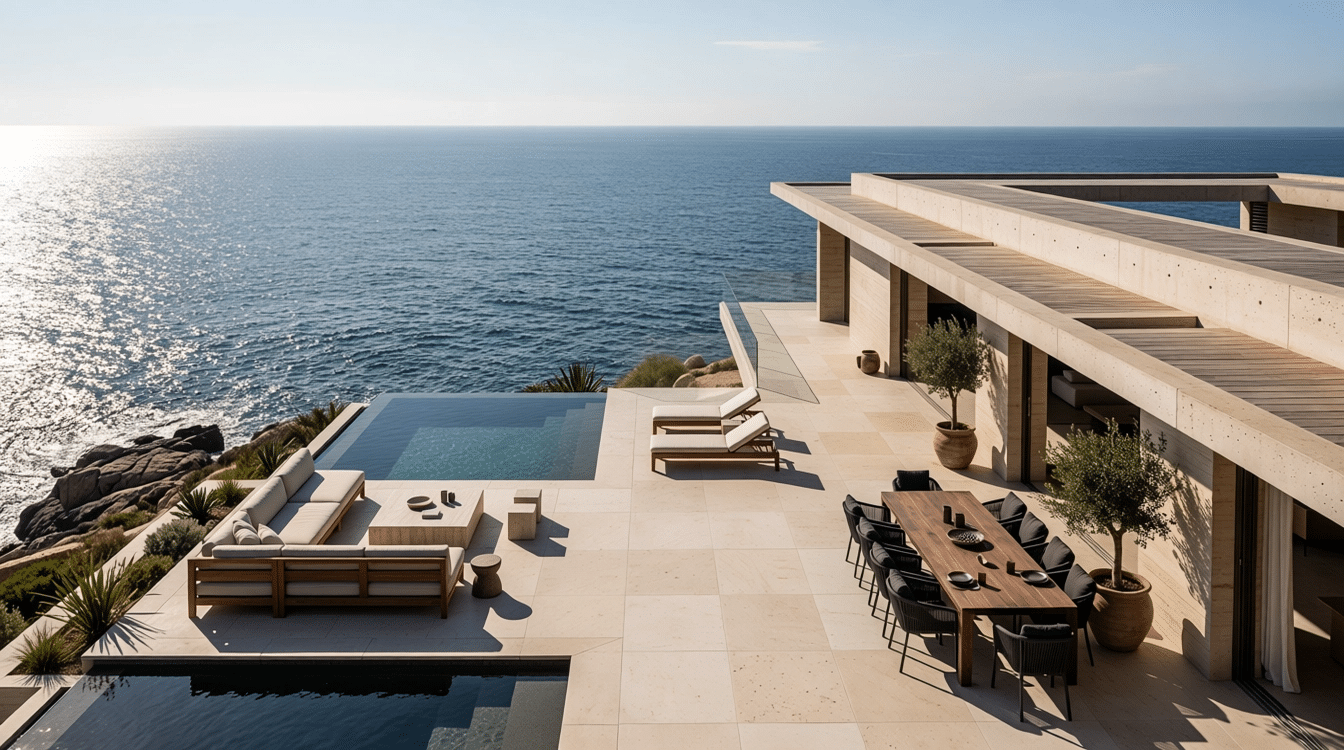
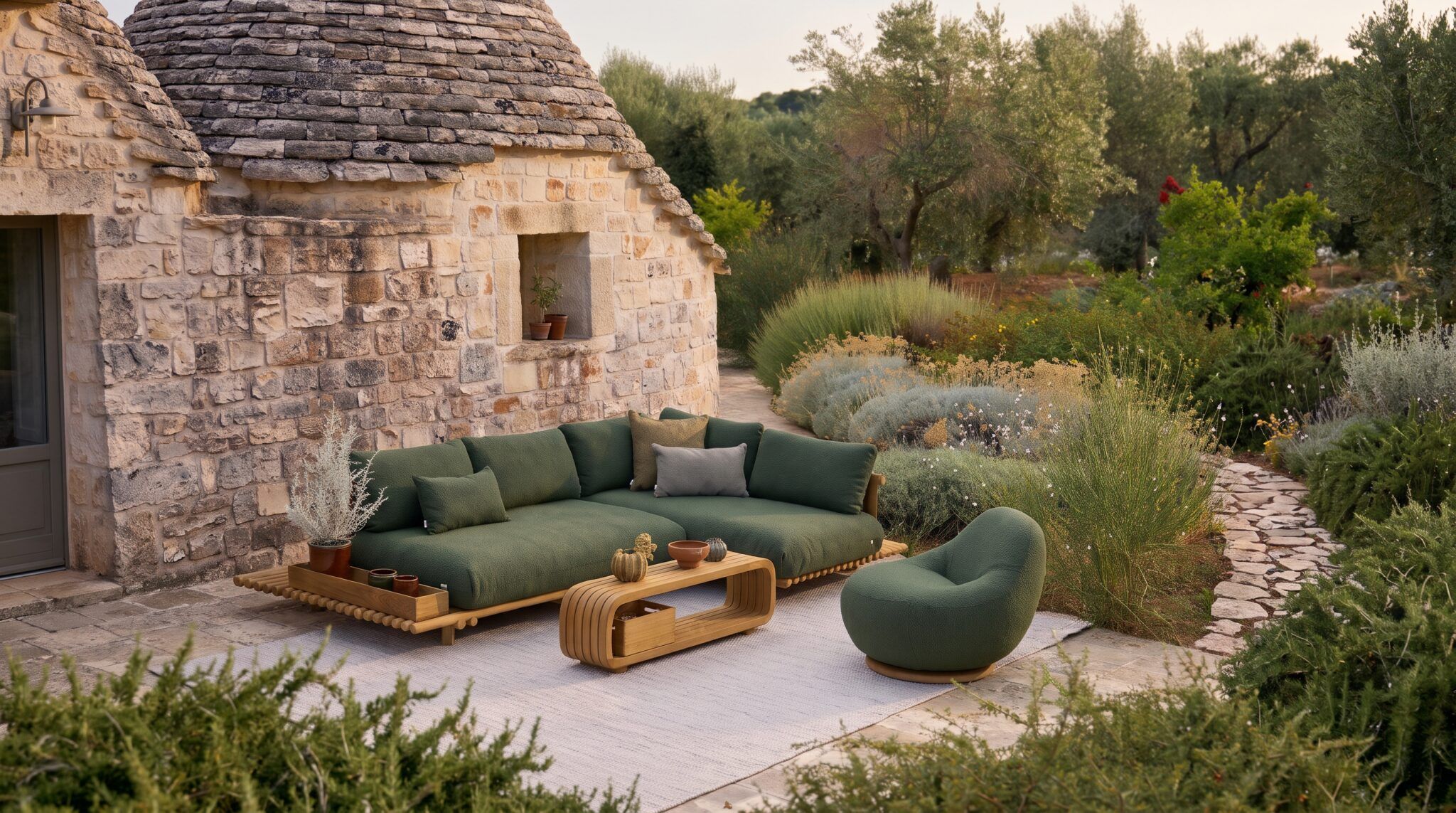
An outdoor setting in the Mediterranean may experience long periods of intense sunlight followed by seasonal rain. A tropical destination may face persistent humidity and frequent moisture. In warmer regions, UV exposure and heat can become important considerations throughout the year.
These differences influence material selection, finishing, construction, and maintenance. Understanding the environment is often the first step toward making a more considered furniture decision.
Four Materials Worth Looking Closer At
Teak — A Natural Character That Evolves
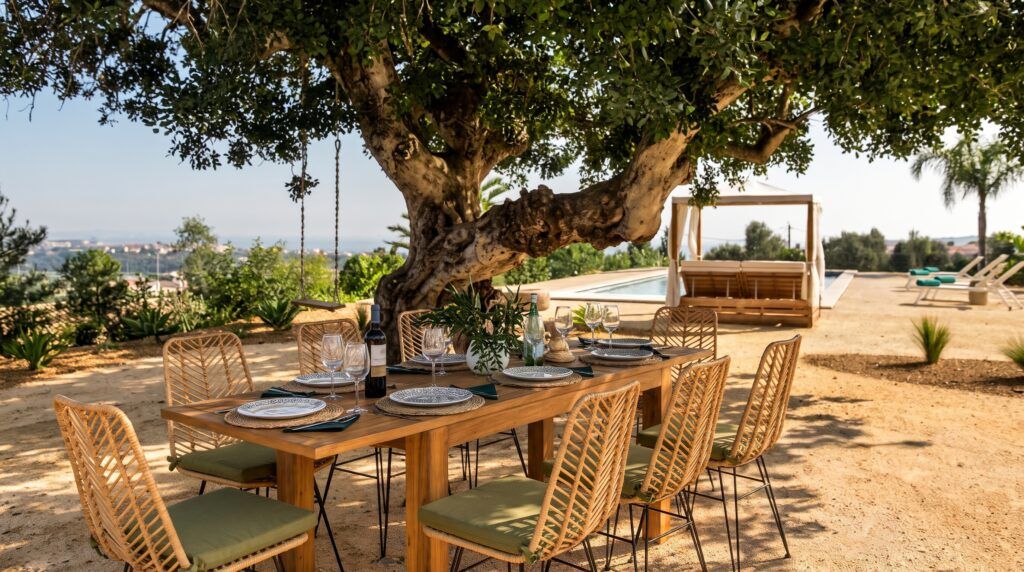
Teak is valued for its warm grain, natural oils, and resistance to decay, making it a considered choice for outdoor furniture.
But here is something worth knowing: the familiar silver-grey finish of aged teak is not necessarily a sign of deterioration. Sunlight gradually breaks down lignin, a natural component responsible for wood’s structure and colour near the surface, while rain washes away the weathered fibres. The result is a soft silver-grey patina, while the wood beneath can remain structurally sound.
Its colour can change without compromising its natural durability. The real decision is whether to preserve its original golden-brown tone through suitable maintenance or allow it to age naturally.
Aluminium — Lightweight, Versatile, and Considered
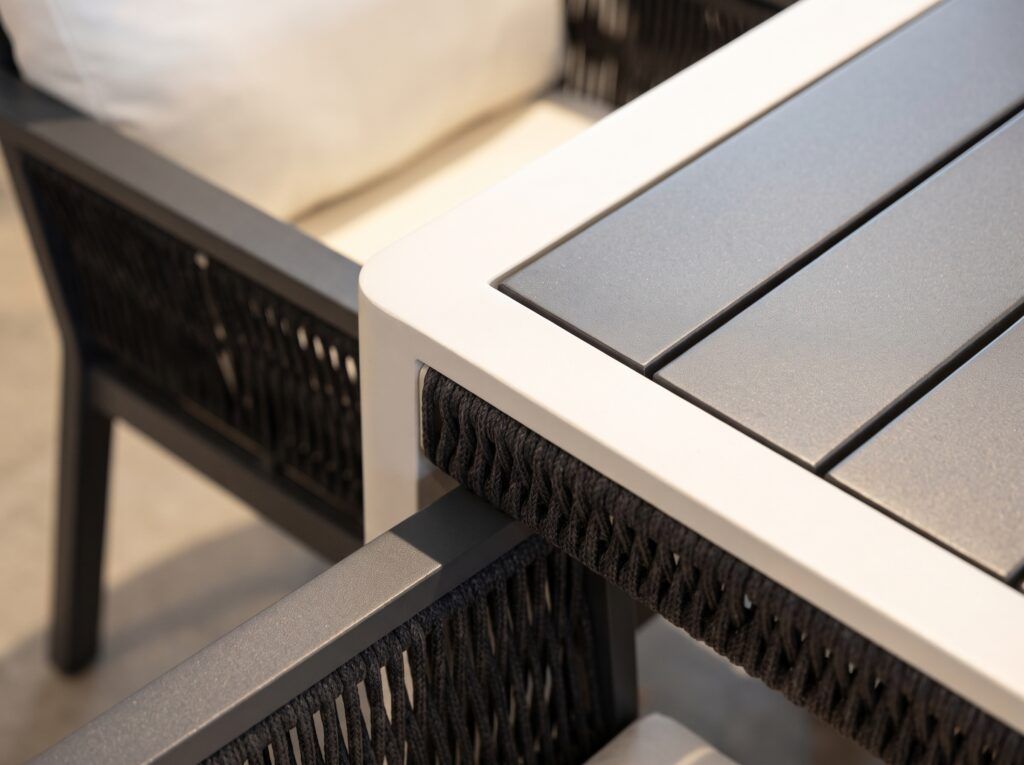
Aluminium allows outdoor furniture to take on everything from slim, lightweight frames to bold architectural forms. It also naturally forms an ultra-thin oxide layer when exposed to air, which helps protect the metal from corrosion.
Here’s a lesser-known detail: this protective layer can reform naturally when scratched, provided the surface is exposed to oxygen. However, this does not make aluminium corrosion-proof. Moisture trapped around joints, contact with dissimilar metals, or damage to its finish can still lead to localised corrosion.
That is why alloy selection, surface preparation, and the right anodised or powder-coated finish matter. For project buyers, the quality of these details is just as important as the frame’s design.
Rope & Woven Materials — Texture with a Purpose
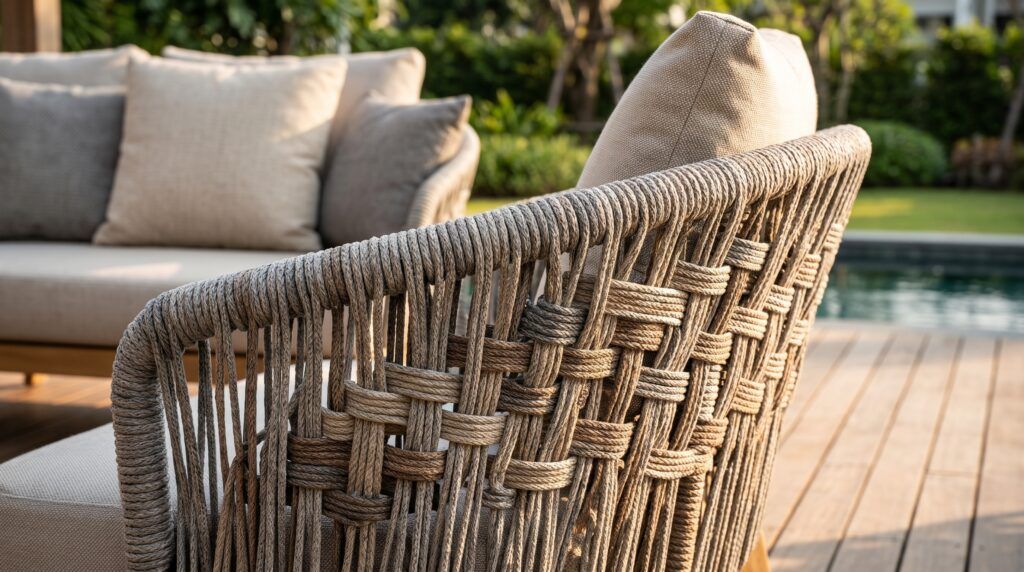
Synthetic rope and woven fibres add texture and softness to outdoor furniture, but their performance depends on the fibre and how it is constructed. UV-stabilised polypropylene or HDPE can offer low moisture absorption and better resistance to fading, while weave density, tension, and drainage affect comfort and long-term durability.
A detail worth knowing: in solution-dyed fibres, colour is added before the yarn is formed, so the pigment runs throughout the fibre rather than sitting only on its surface. This can improve colour retention under sunlight, although it does not make the material immune to fading.
For project buyers, fibre composition, UV stabilisation, weave construction, and frame contact points deserve as much attention as the colour and pattern.
Outdoor Fabrics — Comfort Beyond the First Season
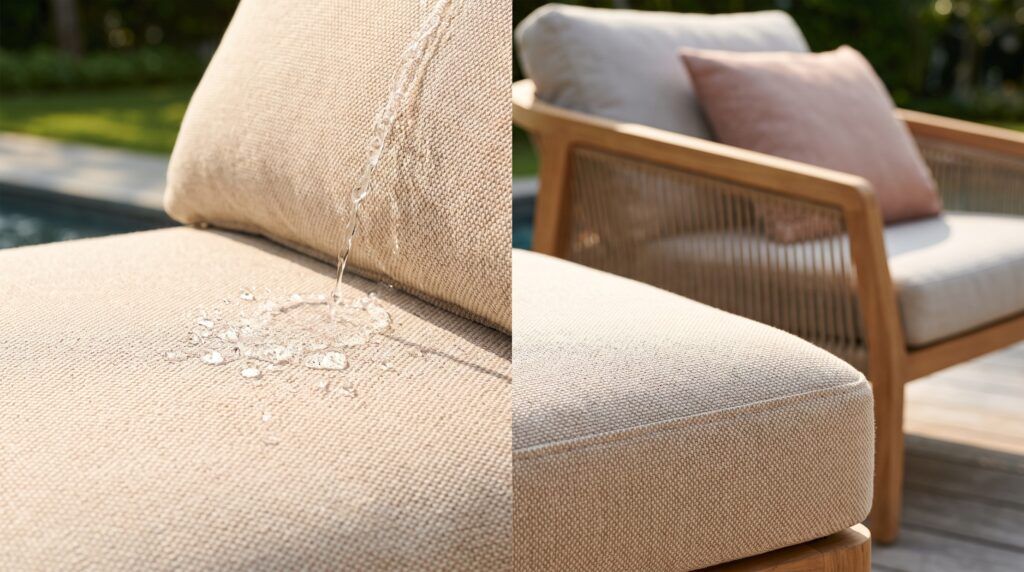
Outdoor fabrics must withstand more than sunlight. UV exposure, moisture, abrasion, stains, and repeated cleaning all affect their long-term performance. Fibre composition, colourfastness, water repellency, seam construction, and cushion filling should therefore be considered together.
A lesser-known detail: a water-repellent fabric is not necessarily waterproof—and that can be an advantage. Breathable fabrics allow moisture and air to move through, while quick-dry, open-cell foam helps water drain from inside the cushion rather than remain trapped.
For hospitality projects, the right specification is not simply a fabric that resists fading. It is an upholstery system designed to dry efficiently, withstand frequent use, and remain practical to maintain.
Durability Is More Than a Material Name
Even a well-selected material can underperform when its application, construction, or finishing is overlooked.
For furniture buyers, several questions are worth asking before a specification is finalised:
- Where will the furniture be used?
- How much direct sunlight or moisture will it experience?
- What level of maintenance is realistic for the property?
- Are the finishes and components appropriate for the intended conditions?
- Can the supplier consistently reproduce the agreed specifications?
These considerations help connect the original design intent with the realities of everyday use.
From Material Selection to Furniture Sourcing
hoosing the right material is only the starting point. Its performance also depends on how it is processed, joined, finished, and assembled.
A teak frame, for example, still requires suitable timber moisture levels and properly designed joints. Aluminium needs the right alloy and surface treatment, while outdoor rope and upholstery require UV-stable fibres and construction that manages moisture effectively.
These details must be translated into clear product specifications before production begins. Supplier capability, material consistency, construction methods, finishing standards, and inspection criteria all influence the final result.
At Asean Sourcing, we coordinate these decisions with suppliers across Indonesia and other sourcing markets—from product development and specification alignment to quality checks, production coordination, and shipment.
Because successful furniture sourcing is not just about finding the right material. It is about making sure every component, process, and supplier can deliver the intended result.
Beautiful furniture begins with a thoughtful choice. What comes next depends on how well that choice is made.
Bringing an Outdoor Furniture Project Together?
From material selection and product development to supplier coordination and quality control, Asean Sourcing helps turn your design requirements into furniture ready for the project.
Let’s discuss what your next project needs.
Related posts
Will It Arrive on Time? The Truth About Shipping Furniture to Coastal and Island Destinations
You’ve placed the order and the factory is producing. Now the questions start: Will it arrive on tim …
Renovating a Beach Club or Coastal Restaurant Between Seasons: The Furniture Timeline That Beats Opening Day
By Asean Sourcing | FF&E and OS&E sourcing for hospitality and residential projects A city re …