
“Finding a supplier is one thing. Building a product that can be repeated is another.”
For furniture brands, wholesalers, and retail buying teams, the first sample is rarely the hard part. A skilled factory can turn out one excellent piece almost anywhere. The real test comes later, when that same design has to be reproduced as 50 units, then 500, then 5,000, without the finish drifting, the joinery loosening, or the ship dates slipping. A buyer who signs off on a beautiful sample in March can still end up rejecting a third of a shipment in August, for a product that was, on paper, “the same.”
That gap, between a good sample and a scalable product, is where most sourcing relationships are quietly won or lost.
A Sample Proves a Factory Can Make It Once, Not Repeatedly
An approved sample proves a factory can build the piece you want. It doesn’t prove the same factory can build 500 more that match it, on schedule, at the agreed cost. Scalability isn’t a property of the design itself, it’s a property of the process behind it: the specifications that get written down, the reference quality control is measured against, and how tightly the supplier network is coordinated once volume increases.
A specification built at sample approval typically needs to cover:
- Exact dimensions and acceptable tolerance ranges
- Material grade, species, and moisture content
- Finish color code, sheen level, and application method
- Hardware type, brand, and fixing points
- Joinery method and structural reinforcement
- Packing configuration and protective materials
Buying teams that treat sample sign-off as the finish line, rather than the point where this specification gets written, often find out too late that the real work was supposed to start there.
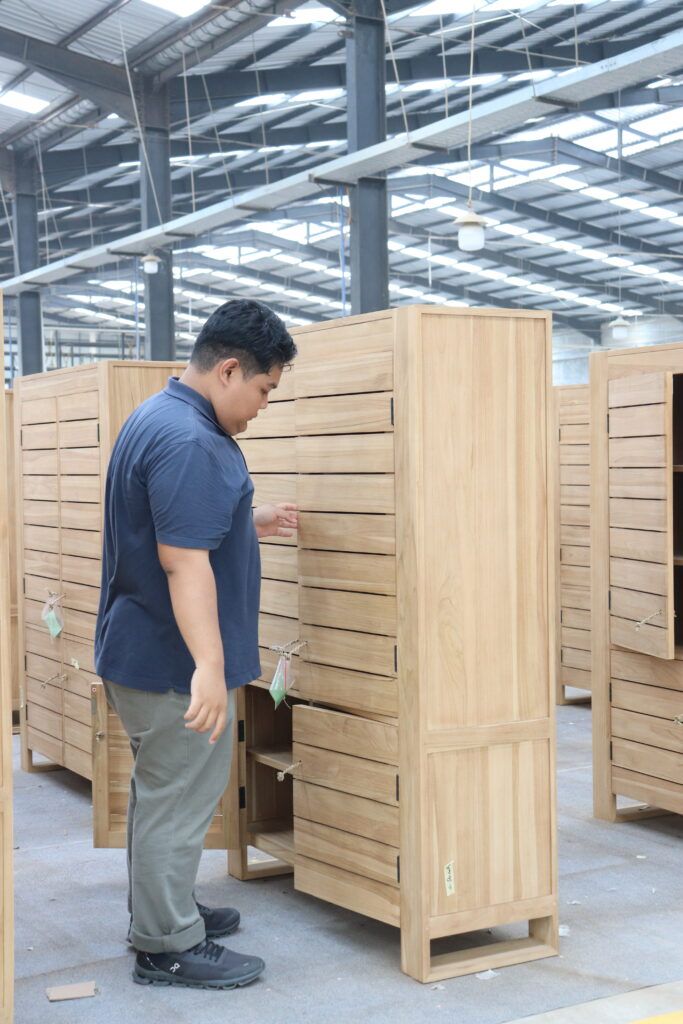
The Four Stages That Turn a Sample Into a Repeatable Product
Scalable production isn’t a single decision, it’s a sequence, and each stage either locks in consistency or lets it quietly erode.
1. Sample Approval: Locking a Standard, Not Just a Look
The approved sample is the reference point every future unit gets measured against, so approval should be treated as a documentation exercise, not just a design decision. Once that specification exists, “matching the sample” stops being a matter of opinion and becomes something that can actually be checked. Without it, consistency depends on whoever happens to be inspecting that day, and that doesn’t scale across factories, production shifts, or seasons.
2. Production: Following the Specification, Not the Memory of the Sample
Once production starts, the factory floor works from the specification, not the original piece sitting in a showroom. This is where supplier coordination decides the outcome: clear production briefings, defined material and finish standards for every batch, and one point of communication between buyer and factory, so substitutions or delays get flagged immediately instead of discovered at final inspection. For orders split across more than one facility, this coordination is what keeps units from one factory matching units from another.
3. Quality Control: The Checkpoint That Keeps Every Batch Honest
QC only protects consistency if it’s measured against the same reference every time: the approved sample and its specification, not the previous shipment. Pre-production, in-line, and pre-shipment inspections catch drift before it compounds, a slightly different stain lot, an unapproved material substitution, a tolerance that’s crept wider over three consecutive orders. A QC report should reference the exact specification document and sample ID it was checked against, not just record a general pass or fail. For repeat-order programs, this reference discipline matters more with every cycle, not less, because small, unflagged deviations tend to compound rather than average out.
4. Packing: Where Consistency Is Won or Lost in Transit
A product that passes QC can still arrive damaged, mismatched, or short-shipped if packing isn’t held to the same standard as the product itself. Cushioning, crating, and load configuration need to be documented and repeated exactly like the product specification, especially for wholesale and retail orders shipping in volume, where a packing failure on unit one repeats itself across an entire container.
Why This Matters More for Wholesale and Retail Than a One-Off Project
A single hospitality project can absorb small inconsistencies between units: different rooms, different angles, different guests. A wholesale catalog or a multi-store retail rollout cannot. If unit 200 doesn’t match unit 1, it shows up on a showroom floor, in a customer return, or in a catalog photo that no longer matches what actually ships. For buying teams building a repeat program, the specification isn’t paperwork, it’s what protects the catalog’s integrity from one order to the next, across every SKU in the line, not just the hero piece that got sampled.
Where Most Furniture Suppliers Fall Short
The gap between a great sample and a scalable product usually comes down to a short list of recurring failures:
- Specifications that live in someone’s head, or a group chat, instead of on paper
- QC that checks the current batch against the last shipment instead of the original approved sample
- A single factory contact who becomes a bottleneck, or a point of failure, the moment volume increases
- No clear escalation process when a material or component becomes unavailable mid-order
None of these show up during sample development. They tend to surface on the second or third repeat order, when a buying team is counting on a consistency it was never actually given in writing.
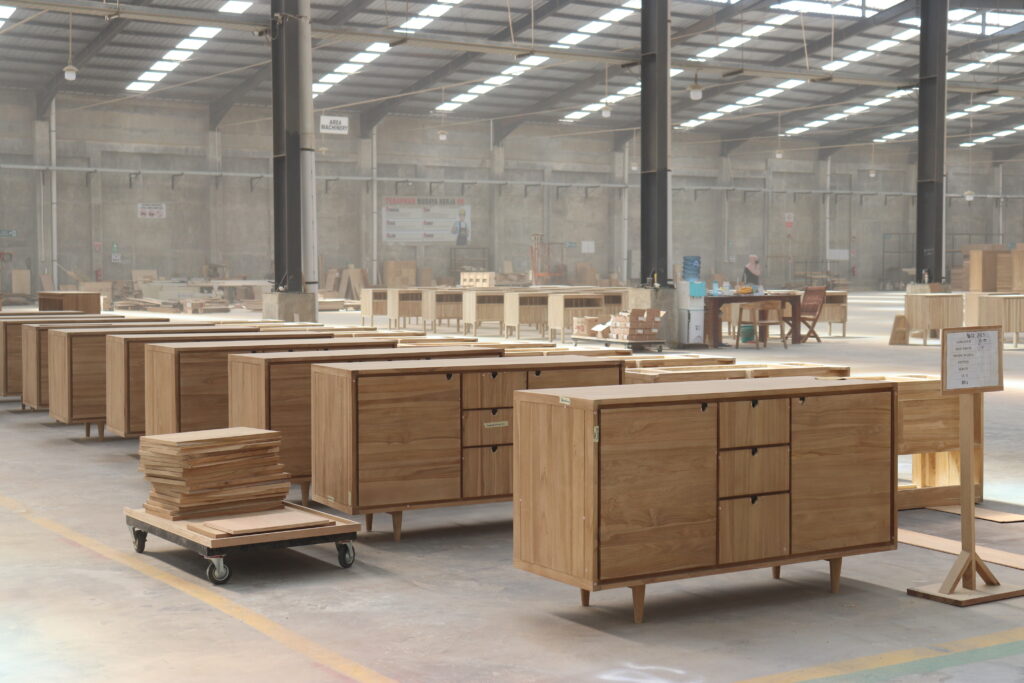
Questions to Ask Before You Scale a Product With a New Supplier
Before committing a product line to volume production, it’s worth asking a potential supplier a short set of questions that reveal whether scalability has actually been built into their process:
- Will the approved sample be converted into a written specification I can review?
- What is the QC reference for later batches: the original sample, or the most recent shipment?
- How many factories could this order be split across, and who coordinates consistency between them?
- What happens if a material or hardware component becomes unavailable mid-order?
- What’s the documented packing standard, and does it travel with the specification?
A supplier who can answer these clearly, before the first purchase order is placed, is one who has already thought past the sample.
Building Scalability In From the First Order
This is the practical difference between working with a broker and working with a principal supplier. As a principal supplier, not a broker, Asean Sourcing holds one contract and one point of accountability across a manufacturing network spanning Indonesia, Vietnam, Malaysia, and China, so specifications, QC references, and supplier coordination stay consistent whether an order is fulfilled by one factory or split across several. That’s particularly relevant for wholesale and retail buying teams sourcing across multiple product categories at once, where consistency has to hold across an entire program, not just within a single order.
Need to Scale a Product? Build the Production Standard Early
The right time to build a production standard isn’t after the third repeat order runs into trouble, it’s at sample approval, before the first unit is ever cut. Furniture brands, wholesalers, and retail buying teams evaluating a new supplier relationship should ask not just “can you make this sample,” but “can you show me the specification and QC reference this sample will be measured against for every order after it.”
If you’re planning a product line that needs to scale, not just launch, talk to Asean Sourcing’s team about building the specification, QC, and coordination standard in from the first order.
Related posts

Custom vs Catalogue: What Architects and Interior Designers Need to Know Before Specifying Furniture
Most furniture sourcing starts the same way: a catalogue and a shortlist. For hospitality and reside …

Choosing the Perfect Wood for Your Coffee Table: A Guide
Choosing the right wood for your coffee table can transform your space. Discover essential tips and …