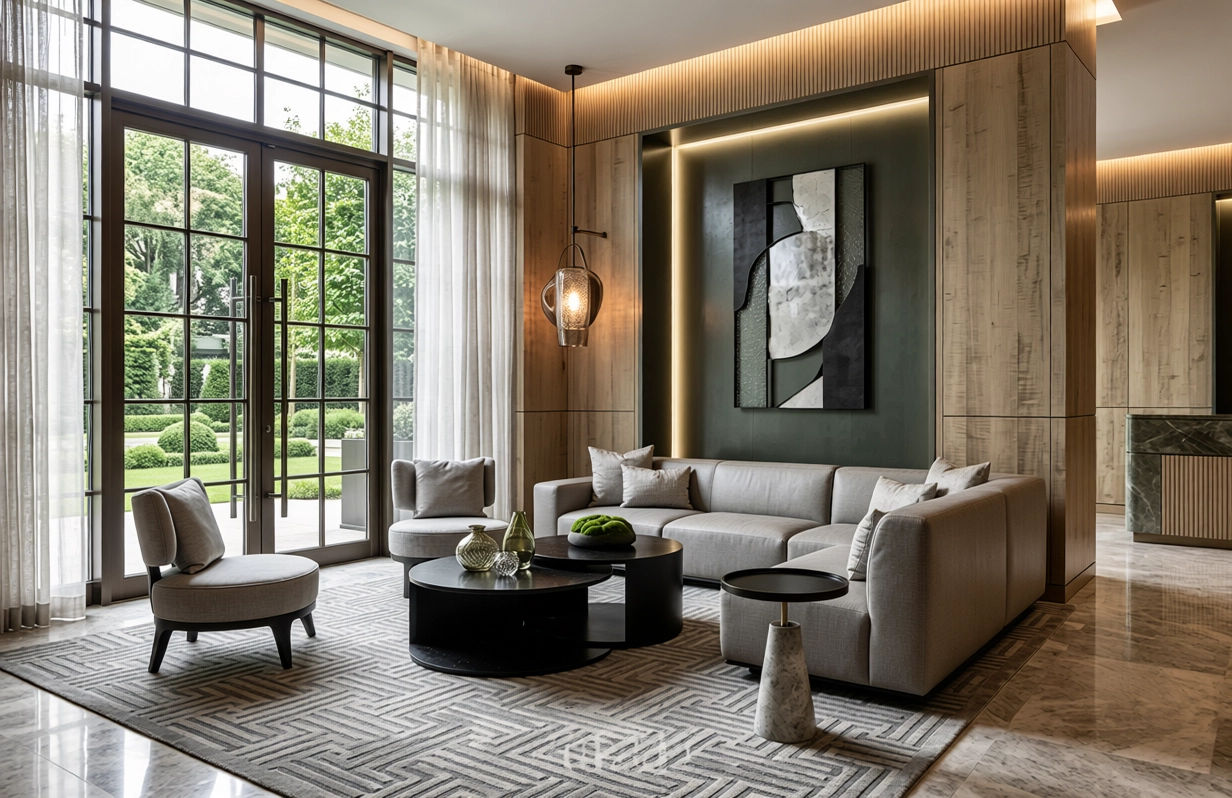
Most furniture sourcing starts the same way: a catalogue and a shortlist. For hospitality and residential projects where the design intent depends on specific dimensions, finishes, and materials, that starting point quietly decides the outcome long before installation day. The room either becomes the design that was drawn, or it becomes a close approximation of it, close enough to pass a walkthrough, not quite close enough to feel intentional.
For architects, interior designers, and procurement teams managing FF&E across hospitality and residential projects, the choice between custom and catalogue sourcing isn’t really a matter of taste or budget alone. It’s a decision about control over exact dimensions, over finish accuracy, over how faithfully the finished space matches the drawing it was based on. Understanding what each path actually involves, rather than only what each appears to cost, is what separates a specification that survives production from one that gets quietly diluted somewhere between the brief and the container.
The Real Difference Isn’t Price — It’s Control
Catalogue sourcing sells certainty. The piece already exists, the price is fixed, the lead time is known, and a sample can typically be reviewed before commitment. For standardized or back-of-house items guestroom case goods repeated across two hundred keys, or OS&E pieces a guest will never consciously register that certainty is exactly what a project needs, and paying more for customization on those items rarely earns its cost back.
Custom sourcing sells fidelity. The piece is built to the drawing, not adapted from whatever a factory already has in production. Dimensions match the millwork instead of the nearest stock size. Finishes match the material palette instead of the nearest available stain code. For signature pieces a lobby console, a restaurant banquette, a branded case good line rolled out across a portfolio that fidelity is the difference between a space that reads as designed and one that reads as furnished.
Neither approach is inherently the right one. The mistake most specifications make isn’t choosing custom or catalogue it’s choosing one by default, across every item, without asking which pieces actually need which kind of control.
What Catalogue Sourcing Quietly Costs You
Catalogue sourcing is usually chosen for speed, and for items already in production, it genuinely can be faster. But for anything with specific design intent, the trade-offs tend to surface after the piece has already landed on-site which is the worst possible time to discover them.
The most common cost is dimensional compromise. A console two centimeters too deep for a corridor pinch point. A headboard sized for a bed frame that isn’t quite the one specified. Small enough to get approved under deadline pressure, large enough to be visible in every photograph of the finished space afterward.
The second is finish substitution. “Similar to walnut” is not walnut. A catalogue’s finish range was built around someone else’s brand standard, not the current project’s material story, and design intent gets rounded off to whatever the factory already stocks on the shelf.
The third, and the one procurement teams feel most acutely on multi-property projects, is brand standard drift. For hospitality groups with a defined FF&E specification, sourcing the same item from catalogue across different markets often means several factories interpreting the same brief slightly differently — a small variance on one property, a visible inconsistency across a portfolio.
What Custom Furniture Sourcing From Asia Actually Involves
“Custom” gets used loosely across this industry, so it’s worth being specific about what a properly managed custom sourcing process actually looks like, from brief to installation.
It starts with a design brief review, not a product catalogue. Working from architectural drawings, material boards, or even a single strong reference image, the sourcing partner’s job is to translate design intent into a buildable, accurately costed specification before a single piece of material is cut.
Factory matching comes next, and this is where Asia’s manufacturing landscape earns its reputation: it isn’t one capability, it’s several. Rattan and solid-wood casegoods sit with a different production skillset than upholstered seating, which is different again from metal-and-stone hybrid pieces. Matching the right factory to the right piece, rather than routing everything through a single generalist workshop, is what protects both quality and lead time.
Then comes sampling and prototype approval, where joinery, dimensions, and finish are verified against the original brief before full production begins — the checkpoint that catches a misread drawing while it’s still one sample, not two hundred finished pieces. Structured quality checkpoints continue through production rather than a single inspection at the end, which is what a 98% quality compliance benchmark is actually built on: catching deviation early, not correcting it after the fact.
The part that matters most for architects and procurement teams juggling multiple vendors: under a principal-supplier model, there is one contract and one point of direct accountability for the piece, from brief to delivery not a broker coordinating between designer and factory with the risk sitting quietly in the gap between them.
Timeline Expectations, Honestly
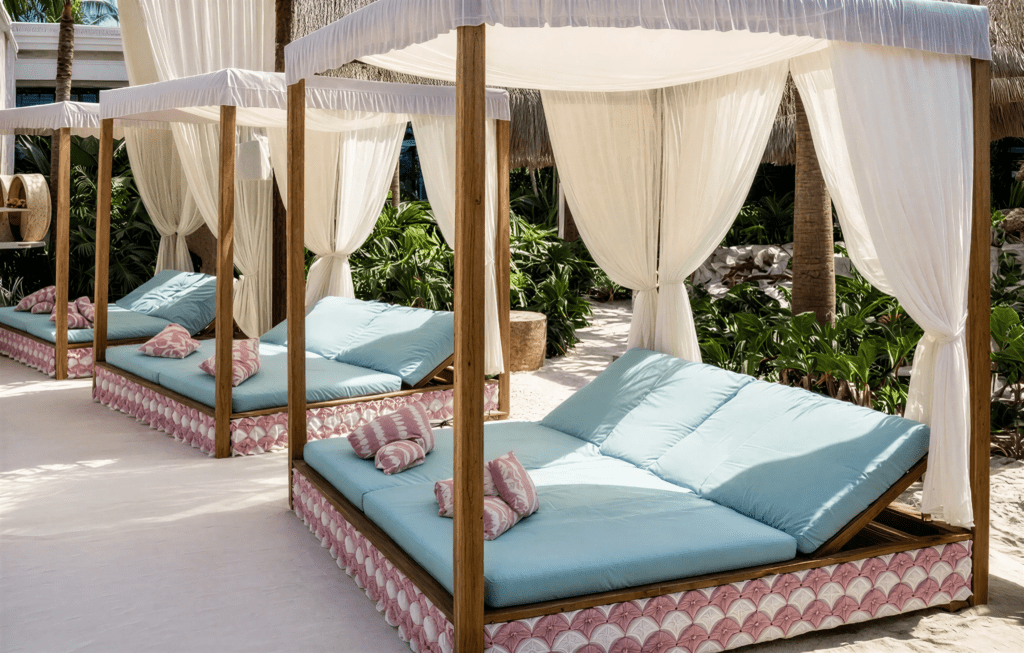
Custom sourcing is often assumed to mean a longer timeline, and it usually does — but not always by as much as expected, and rarely for the reason people assume. The lead time isn’t dominated by production; it’s dominated by how quickly the brief is finalized and the sample is approved. A well-scoped brief with a fast sample approval cycle can close most of the gap with catalogue timelines. A brief that keeps changing after sampling has started is what actually extends a project by weeks, custom or not.
When Catalogue Sourcing Is the Right Call
A specification doesn’t need to default to custom for everything, and the honest answer is that catalogue sourcing is frequently the better decision. It tends to make the most sense for:
- Back-of-house and non-visible areas, where design fidelity has limited return on the additional coordination
- Repeated, high-volume standard items, where consistency across units matters more than individual uniqueness
- Fast-track timelines, where a verified in-stock or near-stock item removes production risk from the schedule entirely
- Budget-constrained line items, where custom tooling and minimum order quantities aren’t justified by the piece’s visibility
When Custom Sourcing Is Worth the Additional Coordination
Custom sourcing earns its complexity when a piece carries part of the project’s design identity the pieces a guest or resident will register as “the design,” not simply “the furniture.” That typically includes:
- Signature lobby, lounge, or F&B pieces that define the first impression of a space
- Branded or proprietary case good lines that need to stay consistent across a hospitality portfolio
- Non-standard dimensions dictated by architecture built-in banquettes, millwork integration, unusual footprints
- Boutique and luxury projects, where material story and finish accuracy are part of the brand promise itself
- Villa and high-end residential projects, where the brief is explicitly “nothing off-the-shelf”
A Simple Way to Decide, Item by Item
Rather than deciding a sourcing strategy for an entire project, it’s more useful and more accurate to run each line item through the same three questions:
- Will this piece be visually prominent in the finished space, or functionally in the background?
- Does the design brief call for dimensions, finishes, or materials that fall outside standard ranges?
- Does the timeline and budget realistically allow for a sampling and production cycle, or does the project need verified, ready stock?
Answered honestly, item by item, the custom-versus-catalogue split for a project tends to sort itself out — not as an aesthetic preference, but as a specification decision made on its own merits.
The best-specified projects rarely rely on one approach exclusively. They use custom sourcing where design identity depends on it, and catalogue sourcing where it doesn’t and they make that call deliberately, piece by piece, rather than by default.
Working on a project that needs custom pieces?
Tell us your brief we’ll tell you what’s possible
Related posts

Choosing the Perfect Wood for Your Coffee Table: A Guide
Choosing the right wood for your coffee table can transform your space. Discover essential tips and …

We Asked Our Clients What It’s Actually Like to Work With Us
Direct client feedback on working with Asean Sourcing’s single-contract FF&E and furniture …