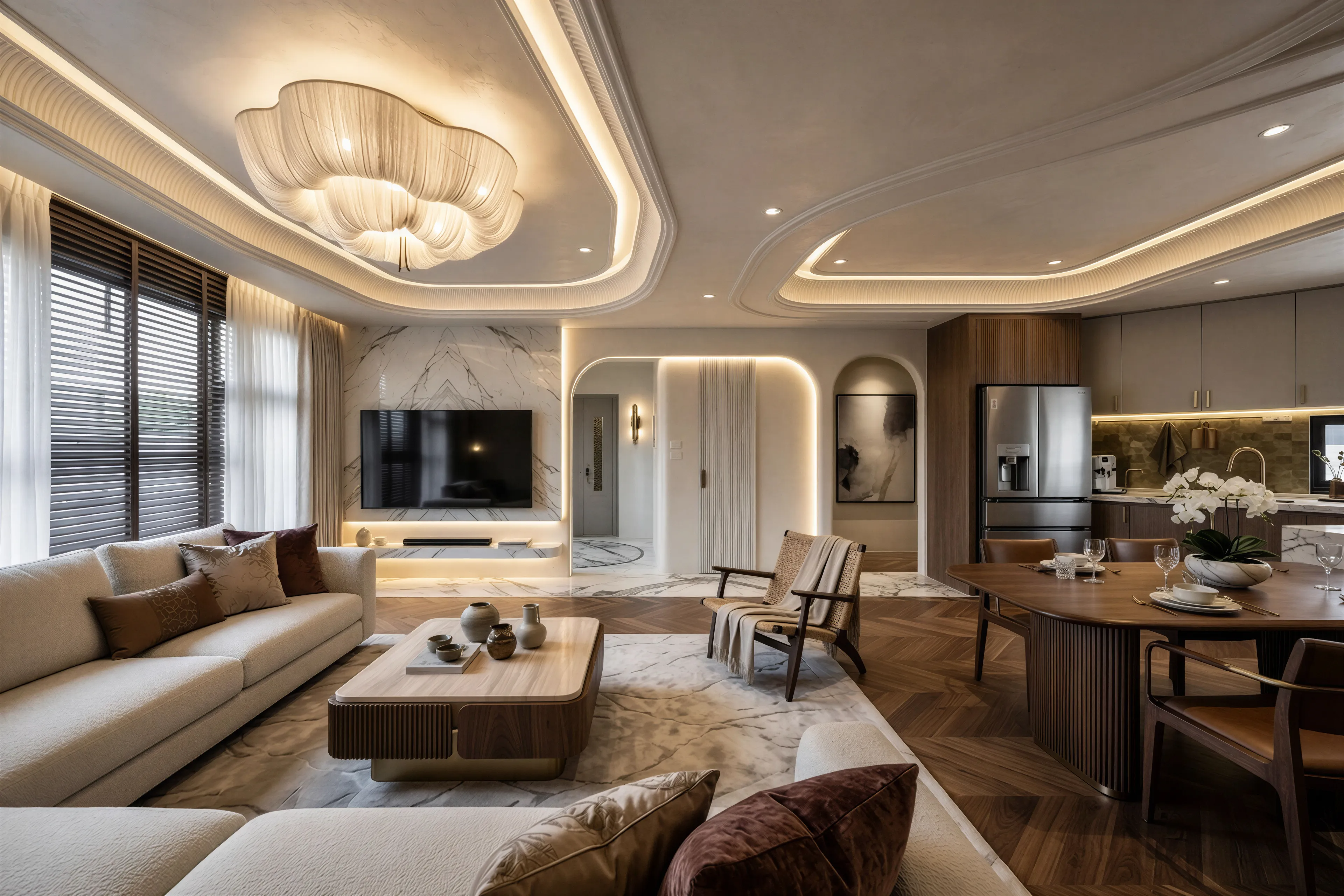
The Expectation Has Already Shifted
Something has quietly changed in luxury residential design.
For years, delivering an exceptional high-end interior was largely a question of curation. Knowing which European manufacturers to specify. Which finishes to combine. Which statement pieces to commission. The work of an architect or interior designer was one of expert selection, identifying the best available products and assembling them with skill and precision.
That model is under significant pressure.
Today’s luxury residential clients, across the UAE, the United Kingdom, the United States, and beyond — are asking a different set of questions. They are less interested in what is available, and more interested in what is possible. Less focused on brand recognition, and more focused on spaces that feel genuinely singular. Spaces that cannot be replicated in another property, another city, or another client’s home.
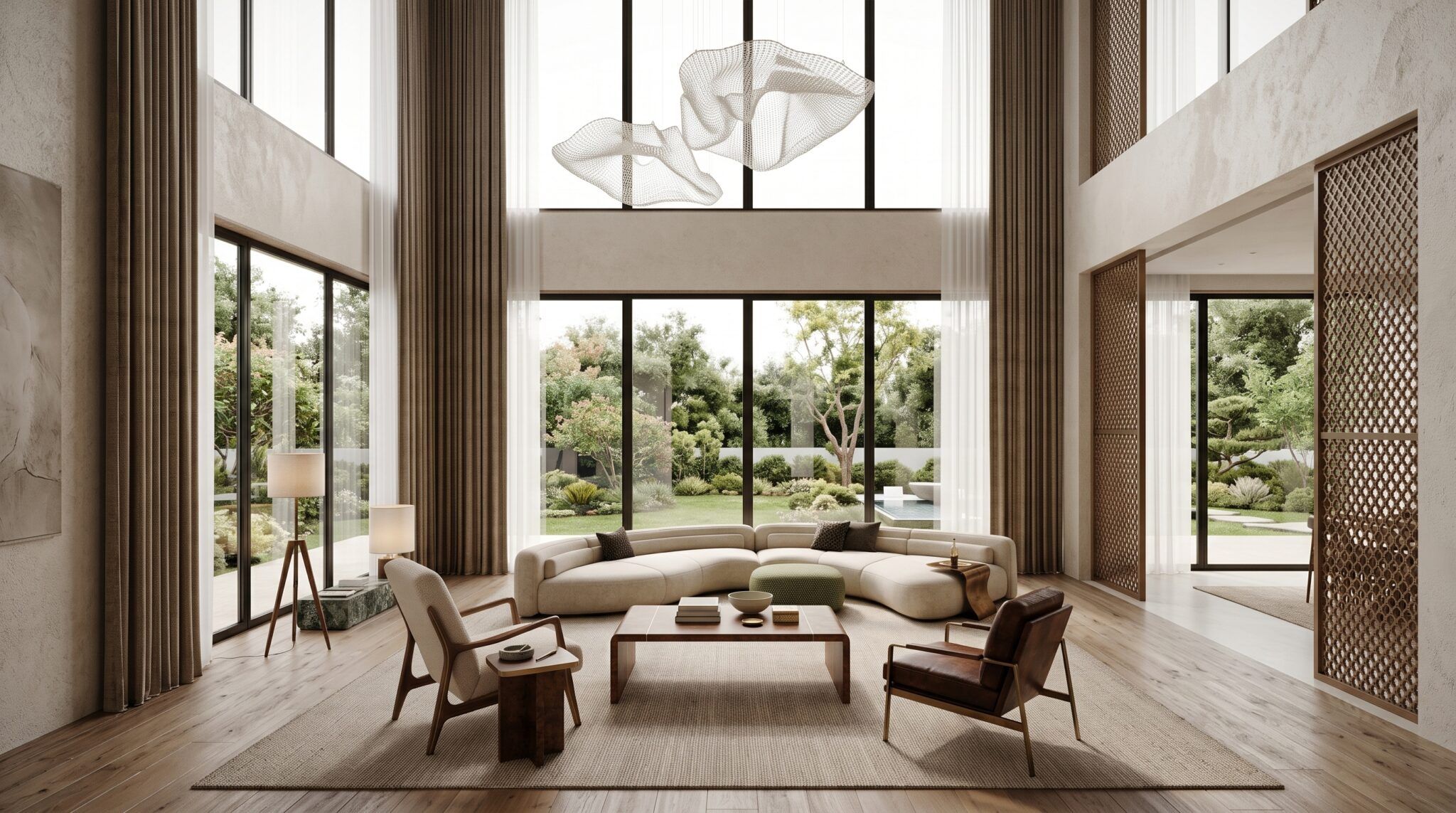
Customization, once treated as a premium upgrade reserved for exceptional commissions, has quietly become the baseline expectation for luxury residential work.
For architects and interior designers, this shift creates remarkable creative opportunity. It also introduces sourcing and procurement challenges that many studios are only beginning to fully address.
Why Standard Product Specifications Are No Longer Meeting Client Expectations
The luxury residential client base has changed significantly over the past decade. Clients are more design-literate, more internationally exposed, and more specific about what they want from their homes.
Off-the-shelf furniture, however well-made, increasingly fails to meet that specificity. A dining table from a well-known European manufacturer may be beautifully crafted but if a client in Dubai or London has encountered the same piece in three other properties, it has already lost much of its value. The product becomes background rather than experience.
Differentiation has become a competitive advantage for luxury residential projects themselves and by extension, for the architects and designers who deliver them. A fully custom interior, conceived and executed with precision, is increasingly how design studios build reputation and retain high-value clients.
This is driving growth in custom and bespoke specification across all major luxury residential markets. Fully custom solutions now account for a significant and growing share of project specifications — particularly in primary living areas, dining spaces, and master suites where personal expression carries the most weight. Buyers increasingly want furniture that fits not only their space dimensions but also their lifestyle, material preferences, and design identity. Combinations that cannot be purchased from any catalog.
For design professionals, this creates both creative freedom and real operational complexity.
The Gap Between Design Intent and Production Reality
Custom specification is where the most successful luxury residential projects are made. It is also where they can quietly fall apart.
The challenge is not conceptual. Most experienced architects and interior designers are entirely capable of developing a compelling custom brief. The challenge is executional — transforming a design concept into a manufactured product that arrives on site with the precision, quality, and timing that a luxury residential project demands.
This gap between intent and production reality is one of the most consistent pain points in high-end residential procurement.
A bespoke sofa with custom dimensions, hand-selected upholstery, and a specific frame finish involves a production process that bears little resemblance to a standard catalog order. Lead times extend significantly 12 to 16 weeks for custom upholstered seating is common, considerably longer for complex joinery, decorative lighting commissions, or pieces requiring imported material components. Any deviation from specification during production a finish reference misread, a material substitution made without approval, a dimension tolerance not maintained — can compromise the design intent of an entire room.
The complexity multiplies across a full residential project scope. Managing multiple custom specifications across multiple suppliers, each operating with different production schedules, communication standards, and quality processes, requires a procurement infrastructure that most residential projects have not yet formalized.
This is precisely why sourcing and procurement strategy matters as much as design strategy in custom residential work. The two cannot be treated as separate disciplines.
Why Asia Has Become Central to Custom Residential Sourcing
As demand for bespoke residential furnishings continues to grow, so does the need for manufacturing partners capable of producing them with craftsmanship, at realistic timescales, and with the technical precision that luxury project specifications require.
Asia has emerged as one of the most important regions for this kind of production.
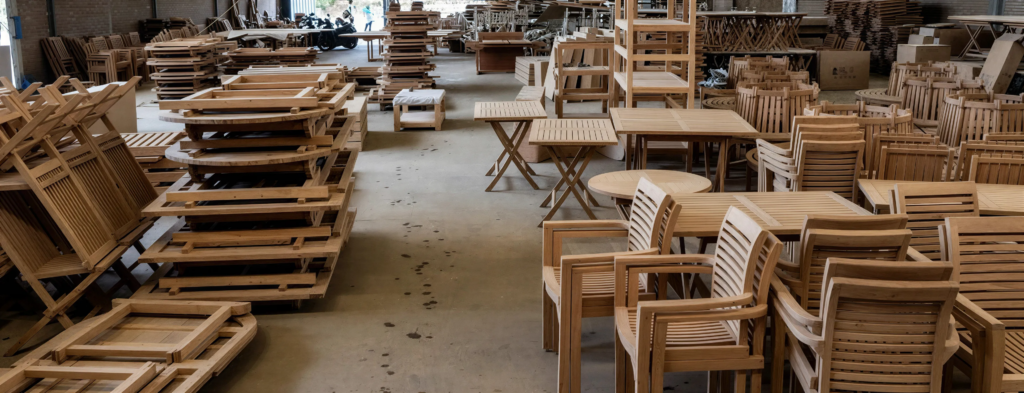
Indonesia brings deep expertise in natural materials and custom furniture production. Skilled craftspeople work across teak, rattan, reclaimed timber, hand-woven natural fibers, and carved decorative elements materials that align closely with the tactile, authentic aesthetic that luxury residential clients across the UAE, UK, and US increasingly seek. The ability to produce custom pieces in small quantities, with genuine handcrafted finishing detail, is a regional strength that is difficult to replicate at comparable quality elsewhere.
Vietnam has expanded its manufacturing capabilities significantly, with strong production across upholstered furnishings, decorative cabinetry, and lacquerwork combining traditional craft knowledge with the capacity for technical precision required by international design specifications.
Malaysia and China contribute complementary capabilities in metalwork, specialist lighting production, custom surface treatments, and precision joinery allowing full custom interior concepts to be developed and coordinated across a single, managed supply base.
For luxury residential projects, this regional manufacturing network offers something that is genuinely difficult to access through traditional European sourcing channels alone: the ability to produce custom, handcrafted pieces with real material quality, at project timelines and price points that allow design ambition to remain commercially viable.
What Effective Custom Residential Procurement Actually Requires
For architects and interior designers moving deeper into bespoke specification, identifying capable manufacturers is only one part of the challenge. Building a procurement approach that reliably protects design intent throughout production requires four core disciplines working in coordination.
Design fidelity from specification to production. Custom products must be manufactured precisely as specified. Effective sourcing begins before production starts — translating design concepts into accurate technical briefs, shop drawings, material specifications, finish references, and dimensional tolerances that manufacturers can produce against with confidence, without room for interpretation.
Supplier qualification and relationship management. Not every manufacturer capable of producing a custom piece can produce it to luxury residential standards, consistently, across an entire project scope. Supplier selection, qualification, and ongoing relationship management are essential to ensuring that quality remains consistent from the first prototype to the final delivery.
Multi-stage quality control. In custom residential procurement, quality assurance cannot be a single inspection at the point of delivery. Pre-production material approvals, in-production progress reviews, and pre-shipment factory inspections are the standard required to identify and resolve issues before products leave the manufacturing facility — not after they arrive on site.
Active timeline and logistics management. Custom production timelines are inherently longer and more variable than catalog orders. Effective procurement requires ongoing timeline management — tracking production milestones against the project FF&E schedule, anticipating delays, and coordinating delivery sequences that align with on-site installation sequencing. A custom piece that arrives three weeks late can affect an entire installation programme.
When these four disciplines are in place, custom specification becomes a reliable design tool rather than a sourcing risk.
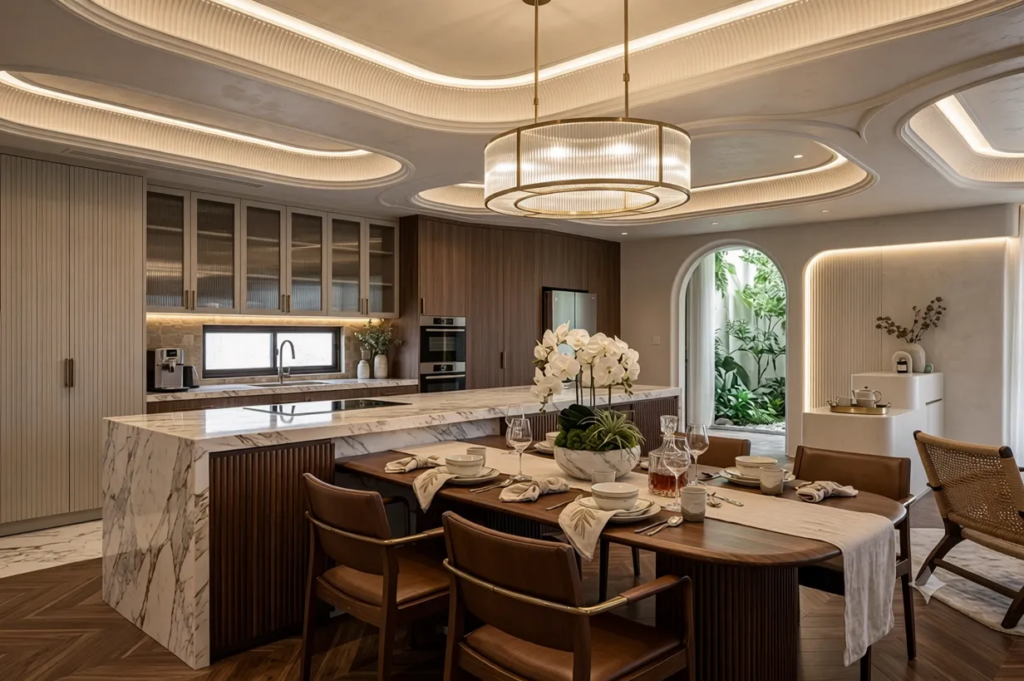
The Standard Has Been Raised — Permanently
The transition toward customization in luxury residential design is not a temporary market shift.
As clients continue to seek interiors that feel personal, irreplicable, and deliberately considered, the demand for bespoke furniture, custom material combinations, and tailor-made finishing solutions will continue to grow. The studios best positioned to meet that demand will be those that have built the sourcing and procurement capability to support it — not as an afterthought that follows design decisions, but as a discipline integrated into the project process from the earliest stages.
Because the new measure of luxury in residential design is not the prestige of a brand name or the scale of a space.
It is how precisely a space reflects the person who lives in it.
And achieving that precision — from initial concept to final installation — requires more than exceptional design.
It requires the sourcing infrastructure to bring that design to life without compromise.
Asean Sourcing supports architects, interior designers, and developers in translating custom residential concepts into finished products through supplier development, FF&E procurement, multi-stage quality control, and logistics management across our manufacturing network in Indonesia, Vietnam, Malaysia, and China.
Related posts
Total Cost of Ownership: The FF&E Math Most Project Owners Skip
Every hospitality or residential project owner budgets for opening day. The mood boards are approved …
Choosing the Perfect Wood for Your Coffee Table: A Guide
Choosing the right wood for your coffee table can transform your space. Discover essential tips and …