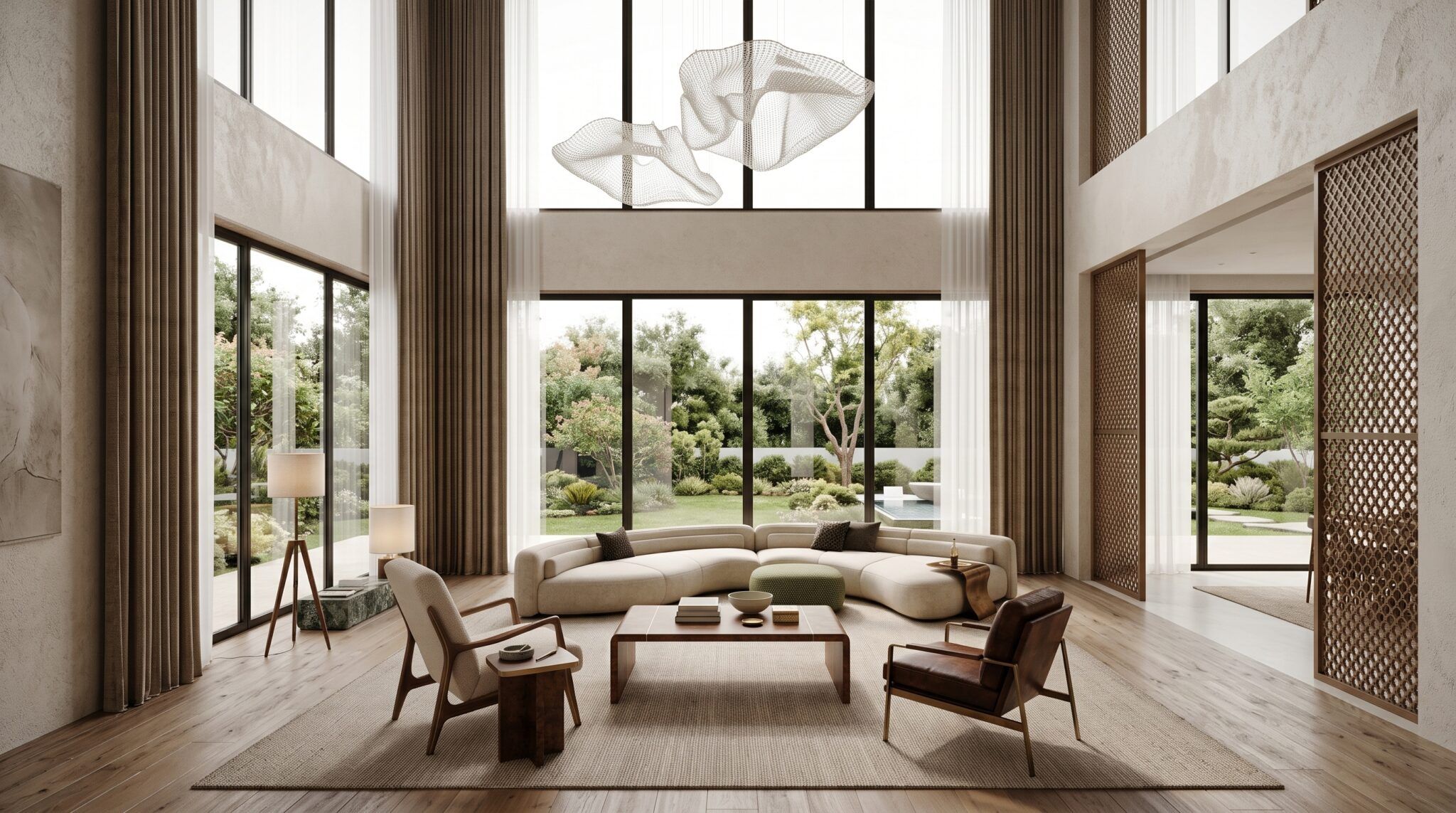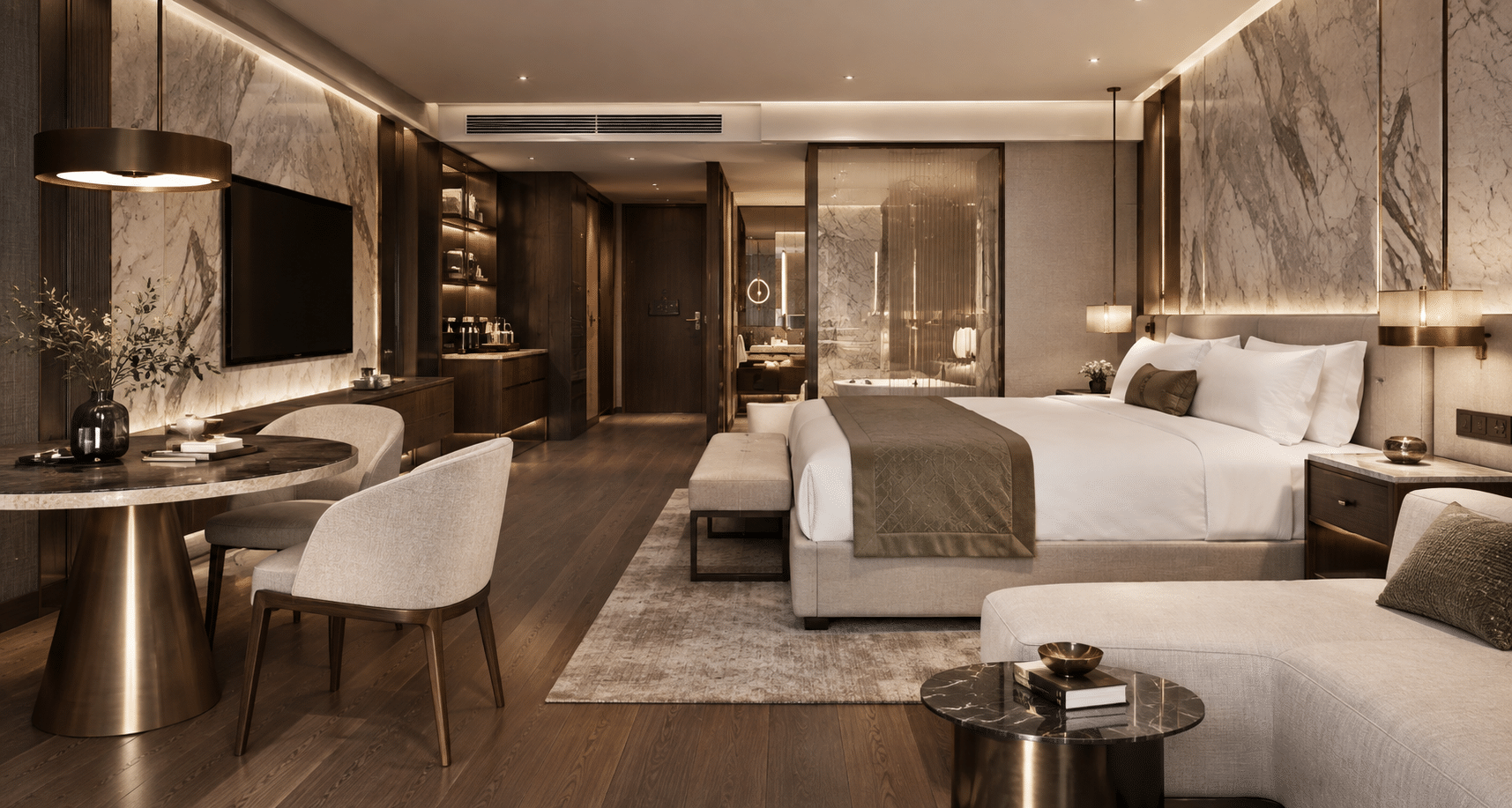
Every hospitality or residential project owner budgets for opening day. The mood boards are approved, the case goods are on the water, the OS&E is staged, and the launch date is locked in. Almost none of them budget for year three, the point where the first upholstery starts showing wear, a hotel brand’s Property Improvement Plan flags non-compliant casegoods, a restaurant group’s second location can’t quite match the booths from the first, or the supplier who quoted the lowest unit price two years ago can no longer reproduce the same finish.
Opening-day price and total cost of ownership are two different numbers. Asset managers, investors, and project managers are asking for the second one more often now. If FF&E decisions are still being evaluated purely on the purchase order line item, the wrong metric is driving the decision, and the difference gets paid for later, usually at a worse time and a worse price.
What “Total Cost of Ownership” Actually Means for FF&E
Total cost of ownership (TCO) is the full cost of a product across its usable life, not just the invoice at delivery. For hospitality and residential FF&E, that includes the unit price, freight and duties, installation, expected maintenance, and critically what it costs to replace or reorder when the piece reaches end of life.
That “end of life” point isn’t as far off as it feels during a fit-out. FF&E typically represents 12–18% of a hotel’s total development cost, and guest-room case goods and soft seating or their equivalents in a restaurant dining room or a residential common area are commonly replaced on a 7–9 year cycle, faster in higher-turnover segments. A product bought for a great opening-day price still has to survive that cycle at a reasonable cost, or the “savings” disappear well before the next renovation, refresh, or rollout is even on the calendar.
This is the math most owners and procurement teams skip not because it’s complicated, but because nobody hands them the second number at the point of decision. Suppliers quote price. Almost none quote ownership cost.
Where Owners and Procurement Teams Skip the Math
Three gaps show up consistently once a project moves past opening day:
The reactive-replacement premium
Planned, condition-based renewal is cheaper than reacting to failure. Rushed procurement, expedited freight, and guest- or tenant-facing downtime all cost more than the same replacement scheduled a year in advance industry estimates put the premium as high as 18–30% per cycle.
Design and spec mismatch
Hotel brands enforce Property Improvement Plans (PIPs) requiring specific FF&E standards at set intervals. Restaurant groups and residential developers hit the same wall in a different form matching finishes and specs across a second location or a phased build-out. If the original supplier can’t reproduce the exact spec years later, the project either accepts a visible mismatch or re-sources the entire category early both expensive outcomes that have nothing to do with the product actually wearing out.
Hidden delay costs
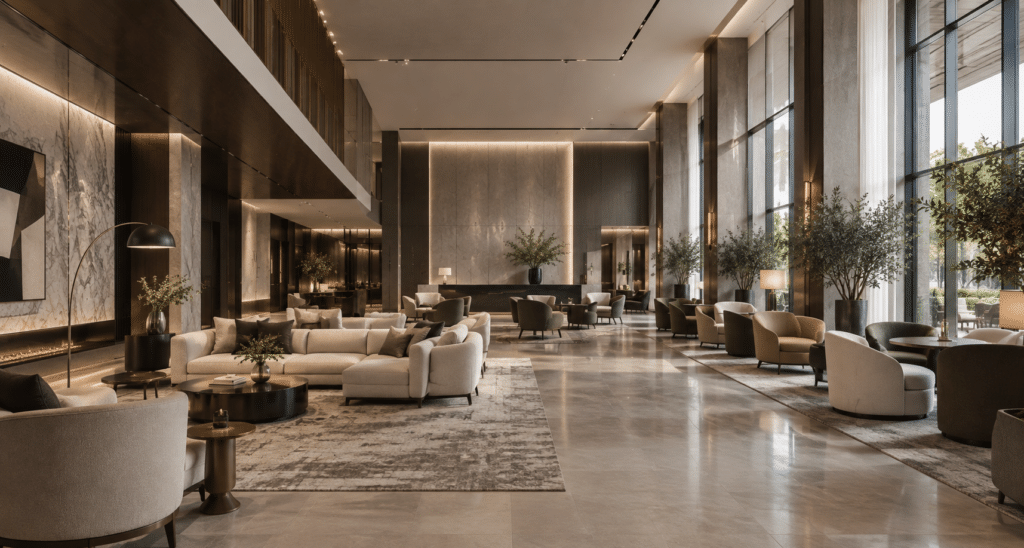
A QC failure that surfaces on-site, not at the factory, means rework, delayed openings, or rooms and spaces pulled out of service during peak season. None of that shows up on the original PO. All of it shows up on the P&L.
None of these are pricing problems. They’re consistency and accountability problems that a low unit price does nothing to solve.
A Simple FF&E TCO Framework You Can Use on Any Quote
Before comparing supplier quotes on price alone, run each one through five questions:
- Unit price — the number on the PO
- Landed cost — freight, duties, and consolidation, not just factory price
- Installation and rework risk — what does it cost if QC fails after installation instead of before shipping
- Expected useful life — realistic years in service for that category (soft seating and upholstery cycle faster than casegoods; lighting and millwork often outlast both)
- Reorder reliability — can this exact spec be reproduced in year five without a full re-tender
Divide the total by expected years of service, and the “cheap” quote and the “well-built” quote often land much closer together than the opening PO suggested sometimes the cheaper quote is more expensive once replacement risk is priced in. This is the comparison procurement teams should be running before award, not after the first replacement cycle proves it the hard way.
Why Supplier Consistency Is a Line Item, Not a Nice-to-Have
Reorder reliability is the piece of the framework that’s easiest to underweight and most expensive to get wrong. It depends entirely on who controls production.
A trading intermediary sources from whichever factory offers the best price that quarter which means the factory, the tooling, and the tolerances behind a reorder can shift without anyone flagging it. A principal partner who manages manufacturing directly can hold the same spec, finish, and QC standard across an initial order and a reorder years later, because it’s the same accountable party managing both.
That’s the structural reason it’s worth asking whether a supplier is a broker or a principal partner before signing. Asean Sourcing works as a principal partner rather than a trading intermediary coordinating manufacturing directly across its network in Indonesia, Vietnam, Malaysia, and China, under one commercial contract with one accountable point of contact, and applying the same structured quality control and consolidated logistics whether the order is for a hotel opening, a residential development, or a multi-location restaurant rollout. That structure matters less on day one of a fit-out than it does later, when a project needs matching replacement pieces and the partner who delivered the original order is the one who can actually reproduce them.
Put the Framework to Work
Total cost of ownership isn’t a reason to avoid a good opening-day price — it’s a reason to ask what’s underneath it. A framework only works when it’s applied to an actual quote, with actual numbers, before the PO is signed.
Whether you’re procuring FF&E for a new hotel, a residential development, or a restaurant build-out, running your current quotes through this framework unit price, landed cost, expected life, and reorder risk is the fastest way to see the real per-year ownership cost behind each option. Talk to Asean Sourcing’s team to walk through your next quote together.
FAQ
What is FF&E total cost of ownership?
It’s the full cost of furniture, fixtures, and equipment across their usable life unit price plus freight, installation, maintenance, and eventual replacement or reorder cost rather than just the price on the original purchase order.
How often does hospitality FF&E need to be replaced?
Most guest-facing FF&E, including case goods and soft seating, is replaced on a 7–9 year cycle, though this varies by category and by brand Property Improvement Plan requirements.
How can owners and procurement teams reduce FF&E lifecycle costs?
By evaluating suppliers on total cost of ownership rather than unit price alone, and by working with a principal partner who can guarantee consistent quality and spec across both the initial order and future reorders.
Does this framework apply outside of hotels?
Yes. Residential developments and restaurant groups face the same lifecycle math — furniture and fixtures still wear out, need reordering to match, and cost more to replace reactively than on a planned cycle. The framework applies to any project where FF&E is a long-term asset, not just hotels.
Related posts
From First Sample to Repeat Order: What Actually Makes a Furniture Product Scalable
“Finding a supplier is one thing. Building a product that can be repeated is another.” Fo …
Custom vs Catalogue: What Architects and Interior Designers Need to Know Before Specifying Furniture
Most furniture sourcing starts the same way: a catalogue and a shortlist. For hospitality and reside …