How experienced buyers vet manufacturers, catch problems before they leave the factory, and build a supply chain that survives a busy season, a price shock, or one supplier’s bad month.
Ask ten wholesale buyers what went wrong on their worst Indonesia order, and eight of them will tell some version of the same story. The sample was flawless. The quotation was competitive. Everyone was polite on the video call. Then, somewhere between the workshop floor and the container door, something changed a finish that didn’t match, a delivery date that slipped by six weeks, a batch of dining chairs where a third of them wobbled on arrival.
None of that is unique to Indonesia. It’s what happens when sourcing is treated as a single transaction find a factory, agree a price, place the order instead of a process with several places where things quietly go wrong. This guide walks through how that process actually works for wholesale buyers and retail brands sourcing furniture in Indonesia: how to pick the right manufacturer for the right product, where quality control needs to start, and why the buyers who source well tend to treat it less like procurement and more like relationship management.
Why Indonesia Still Wins the Furniture Sourcing Conversation
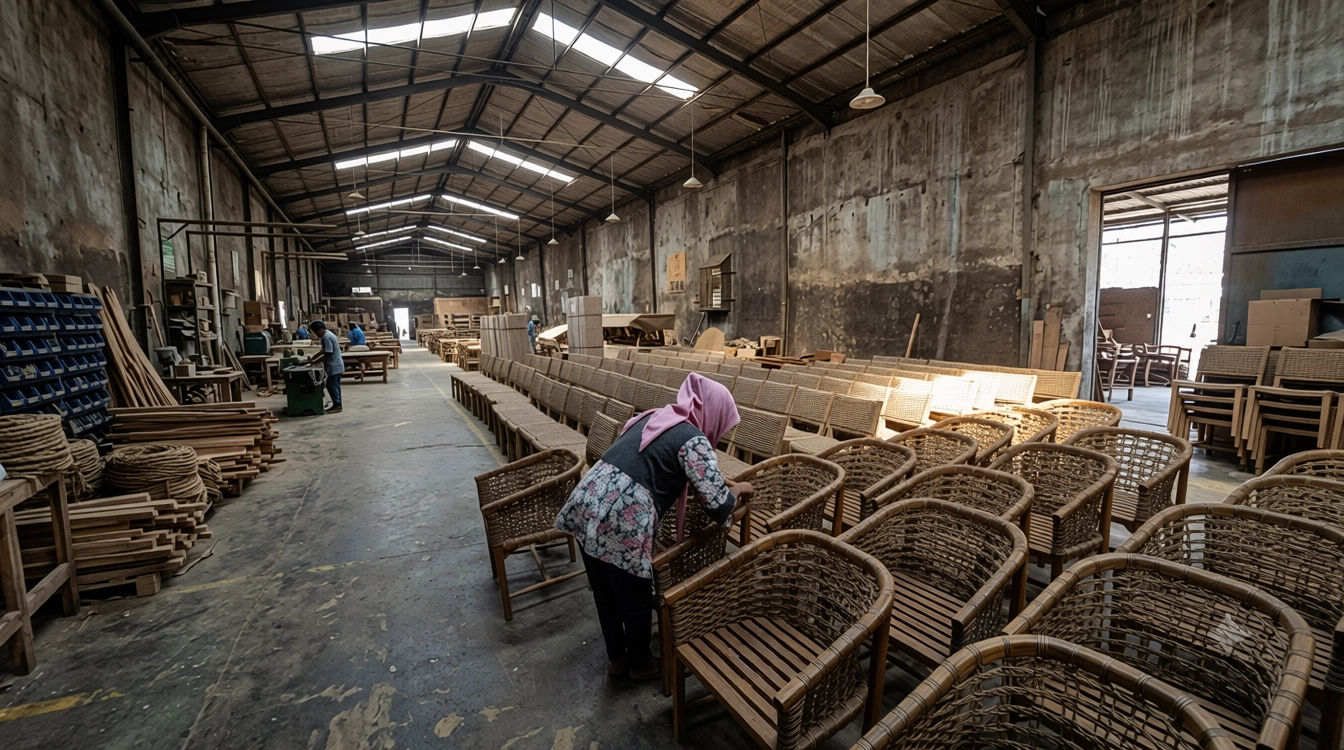
Indonesia’s furniture industry didn’t become an export force by accident. Central Java’s Jepara region has been carving teak for international buyers for generations, and that inherited skill not a factory upgrade or a new machine, is still the reason a lot of buyers won’t source solid wood furniture anywhere else. West Java’s Cirebon corridor plays a similar role for rattan and woven furniture, backed by a domestic supply chain that got a lot more structured after the government restricted raw rattan exports in 2011 to push processing onshore. Add Semarang, Surabaya, Solo, Yogyakarta, and Bali’s more design-forward workshops, and you get a country with genuine depth across materials: teak, mahogany, mindi, suar, natural and synthetic rattan, seagrass, water hyacinth, engineered wood, metal, and upholstery.
What keeps wholesale buyers coming back isn’t just the material range, it’s the flexibility underneath it. Manufacturers here are used to producing under someone else’s brand, working from someone else’s spec sheet, and adjusting for someone else’s market. If you’re building a private label collection, developing OEM furniture for a hospitality group, or need a factory that can hold a finish standard across a multi-year retail contract, Indonesia’s manufacturing base has already done that work for buyers in Europe, North America, the Middle East, and across Asia for decades.
There’s also a craftsmanship dimension that’s easy to undersell. Plenty of sourcing markets have automated their way past it. Indonesian factories more often layer hand-finishing on top of modern machinery, which is exactly why buyers looking for character-driven, slightly imperfect, obviously handmade pieces keep coming back and exactly why buyers looking for machine-perfect uniformity across ten thousand units sometimes look elsewhere. Knowing which camp your product falls into is the first real sourcing decision you’ll make, usually before you’ve even contacted a supplier.
Sourcing Furniture in Indonesia Isn’t the Same as Finding a Factory
The most common misstep among first-time buyers is treating furniture sourcing in Indonesia like a single search: find a factory, get a quote, place the order. Experienced procurement teams know the price on the quotation is the smallest part of the decision.
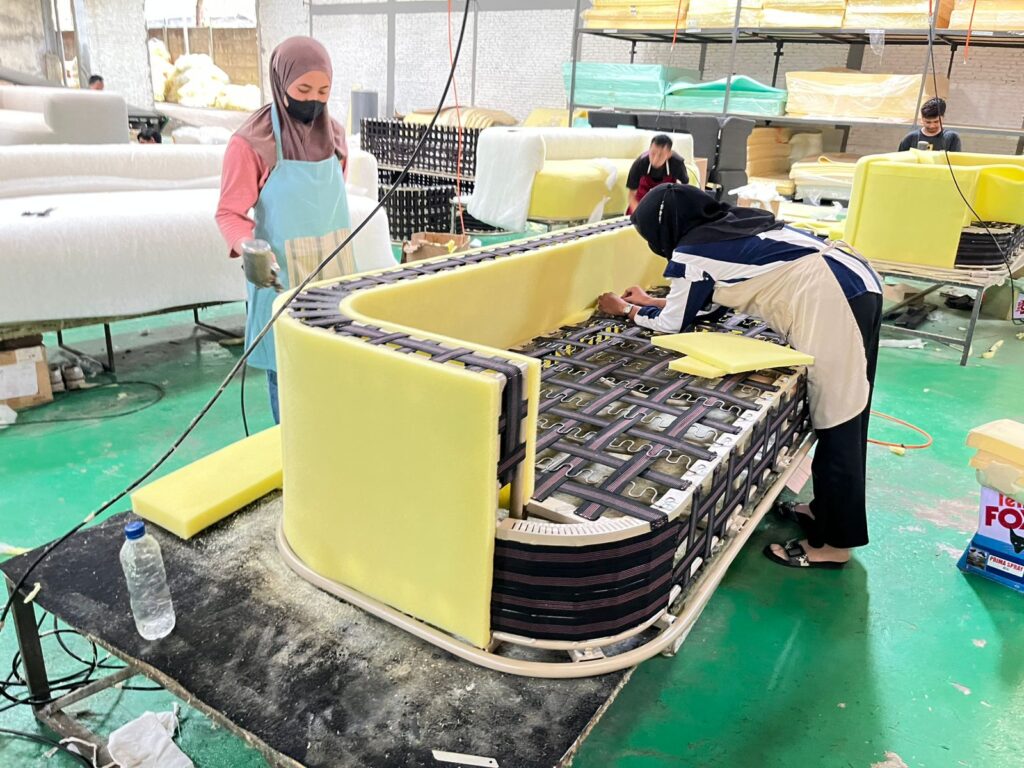
A Jepara workshop that can carve teak dining tables with extraordinary precision may have never touched a sewing machine, ask them to build an upholstered banquette and you’re asking for a problem neither of you wants. A rattan specialist in Cirebon who builds beautiful outdoor lounge sets may have no experience with the load-bearing joinery a hospitality contract demands. And a factory that nails a one-off prototype in the showroom can still fall apart trying to hold that same quality across the eight hundredth unit of a production run.
Good furniture procurement doesn’t chase a single supplier who can supposedly do everything. It builds a network of specialists, each chosen for a narrow strength and then holds every one of them to the same standard for quality, timing, and communication. That coordination work is exactly where a professional furniture sourcing company in Indonesia earns its keep.
How Professional Furniture Sourcing Actually Works
Start With the Brief, Not the Supplier List
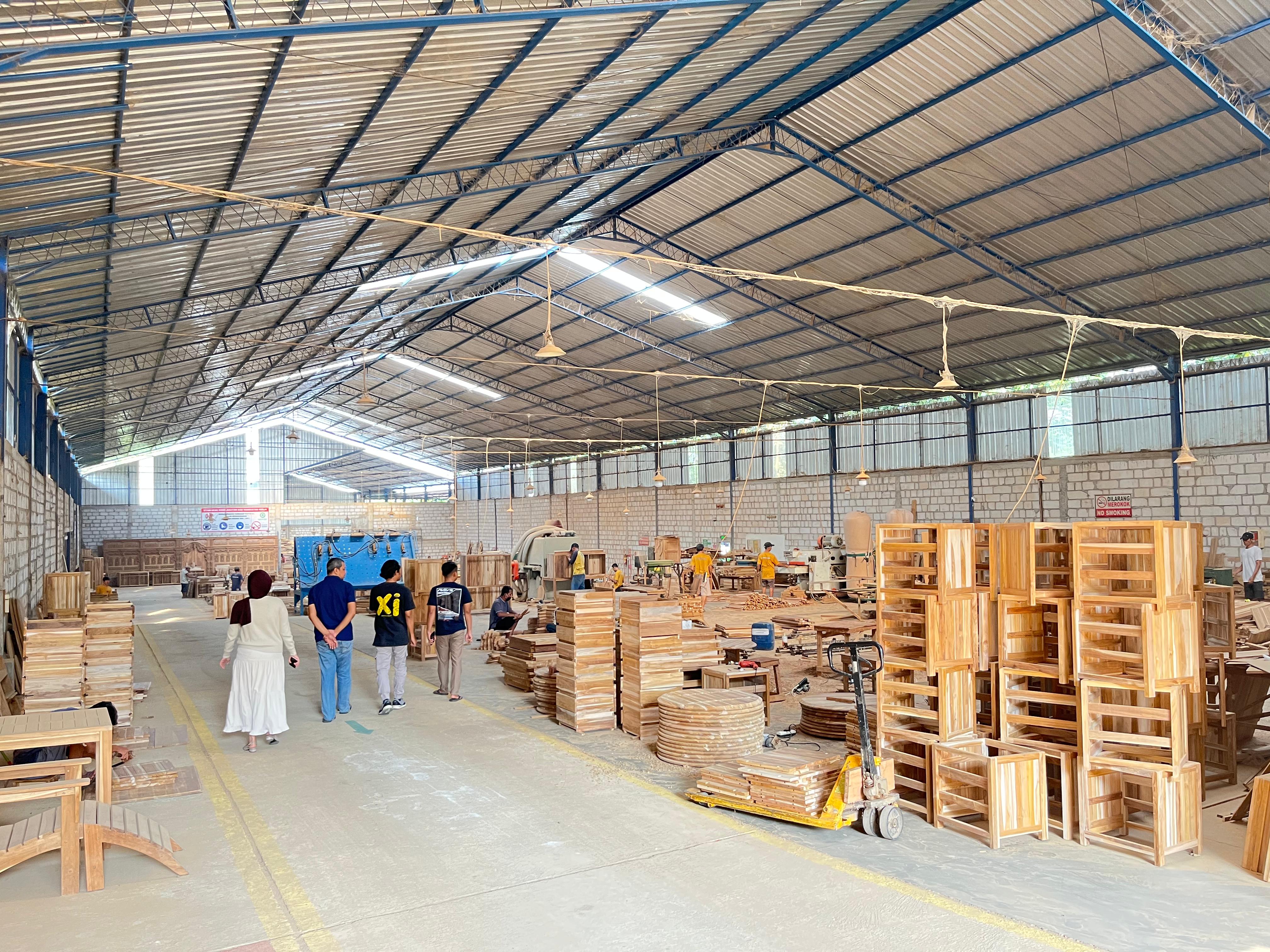
Sourcing that goes well starts before anyone contacts a manufacturer. It starts with a clear picture of the product category, the target market, expected order volume, price positioning, material preferences, packaging needs, compliance requirements, and delivery timeline. Skip this step and you’ll spend the production phase paying for it through revisions, delays, and costs nobody budgeted for, because the supplier you picked was never really right for the brief you hadn’t written yet.
Match the Manufacturer to the Product — Not the Other Way Around
Once the brief is clear, supplier selection becomes a matching exercise rather than a search. Solid wood case goods need different manufacturing capability than upholstered seating. Outdoor collections need weather-resistant construction and materials suited to sun and salt air. Hospitality furniture has to survive commercial use in a way retail furniture rarely does. Retail collections need finish consistency across volumes a boutique workshop was never built to handle. Custom development needs a factory whose designers and engineers can genuinely collaborate with yours, not just execute a drawing.
Rather than forcing one supplier to stretch across all of that, experienced sourcing partners build a bench of manufacturers, each one used for what they’re actually good at.
Why Supplier Verification Isn’t Optional
A polished catalogue and a professional-looking website tell you almost nothing about whether a factory can actually deliver. Buyers who skip verification tend to find that out the expensive way after the deposit’s gone.
A proper supplier audit in Indonesia looks past the sales pitch and into the operation itself:
- Real manufacturing capability versus what’s claimed
- Production capacity against your order volume, not just their largest past order
- Workforce experience and turnover
- Machinery, tooling, and maintenance condition
- Quality management systems, or the lack of them
- Export track record and documentation experience
- Compliance and certification status
- Ethical and labor practices on the factory floor
This isn’t paperwork for its own sake. It’s the difference between finding out a factory can’t hold your spec before you’ve committed six figures to production, or finding out after.
Product Development Is Where Money Gets Made or Lost
Sampling is where a lot of buyers under-invest, and it’s usually the most expensive mistake in the whole process because everything that’s wrong with a sample is cheap to fix, and everything that’s wrong with a container of finished goods is not.
Good product development scrutinizes material selection, dimensions, comfort, construction method, colour consistency, surface finishing, hardware, packaging, and assembly before a single unit goes into mass production. Timber is a good example of how granular this needs to get: export-grade wood is typically kiln-dried down to somewhere around 8–12% moisture content before it’s cut. Get that number wrong and a joint that looked flawless in the sample room can crack or warp somewhere between a humid Indonesian port and a dry warehouse in Rotterdam or Ohio. For retail brands launching a new collection, this stage more than the factory tour, more than the quotation is usually what decides whether the product succeeds once it’s on a showroom floor.
Quality Control Starts on Day One, Not the Day Before Loading
There’s a persistent assumption that quality control is a final check before the container ships. In practice, the most expensive defects are usually decided in the first week of production wrong moisture content, inconsistent material grading, a cutting dimension that’s drifted from the approved sample and they just don’t become visible until much later, when they’re far more expensive to fix.
Professional sourcing operations build inspection into the whole timeline instead of bolting it on at the end:
- Pre-production inspection — confirming materials and setup match the approved sample before cutting starts
- During-production inspection — catching drift early, while it’s still cheap to correct
- Ongoing production monitoring — for longer or more complex runs
- Final random inspection — a statistical check of finished goods before packing
- Container loading supervision — confirming what’s actually loaded matches what was ordered
The goal isn’t to catch problems at the end. It’s to make sure most of them never get the chance to compound.
Managing Multiple Suppliers Without It Becoming a Full-Time Job
It’s rare for a wholesale buyer to source an entire collection from one factory. More often, dining furniture comes from one workshop, lighting from another, decorative accessories from a third, and soft furnishings from a supplier on a different island entirely. Managed independently, that’s five shipping schedules, five sets of quality expectations, and five people to chase for status updates usually across five time zones’ worth of delay.
A sourcing partner collapses that into one relationship. Instead of coordinating separately with every manufacturer, buyers work with a single team handling supplier communication, production updates, inspections, logistics, and shipment consolidation which matters more than it sounds like it should, right up until the week three suppliers all have news at once.
Five Mistakes That Quietly Cost Wholesale Buyers the Most
Choosing on price alone. The lowest quotation is rarely the lowest total cost once delays, defects, and rework enter the picture.
Assuming any factory can make anything. Specialisation is real. A supplier picked for expertise in your specific product category will almost always outperform a generalist picked for convenience.
Skipping independent inspections. Without them, defects usually surface at the destination port the most expensive and least flexible place to discover a problem.
Treating logistics as an afterthought. Packaging, export documentation, and shipping coordination aren’t administrative details bolted onto the end of sourcing they’re part of it.
Underestimating how long verification takes. Rushing supplier vetting to hit a launch date tends to just move the delay further down the timeline, where it’s harder to fix.
Why Retail Brands Are Outsourcing This Entirely
Retail moves faster than it used to. Collections turn over more often, customer expectations keep climbing, and supply chains have more moving parts than they did even five years ago. Building an internal team to manage all of that supplier vetting, quality systems, regional relationships is a real investment, and one a lot of retailers have decided isn’t where their time is best spent.
That’s the calculation behind the shift toward specialist sourcing partners: brands stay focused on product, marketing, and growth, while a team that already has the supplier network and QC systems in place handles what’s happening on the ground in Indonesia.
Why Buyers Work With Asean Sourcing
We don’t measure a good sourcing project by how many factories we can get you into. We measure it by whether your products arrive exactly as expected on schedule, at the quality you approved, without a call from your warehouse manager three weeks after you thought the job was done.
Asean Sourcing partners with wholesale buyers, retail brands, hospitality groups, interior designers, and commercial developers across Asia, Europe, North America, and the Middle East, supporting the full sourcing lifecycle:
- Furniture sourcing and wholesale procurement
- Custom product development and private label manufacturing
- Supplier identification, verification, and factory audits
- Pre-production, during-production, and final inspections
- Container loading supervision
- FF&E procurement for hospitality and commercial projects
- Export documentation and shipping coordination
- Multi-country sourcing across Indonesia, Vietnam, China, and Malaysia
We work as an extension of your procurement team, not a middleman between you and a factory bringing vetted manufacturers, structured QC, and one point of contact into a single, accountable process.
Frequently Asked Questions
How do I verify a furniture manufacturer in Indonesia before placing an order? A factory audit covering production capacity, machinery, workforce, quality systems, and export history done in person or through a sourcing partner — before any deposit is paid.
How long does furniture production in Indonesia typically take, from sample to shipment? It varies by product and volume, but sampling, approval, production, and quality inspection together commonly run eight to sixteen weeks for a standard wholesale order longer for complex custom or hospitality projects.
Can one sourcing partner handle multiple product categories and factories? Yes, that’s the main advantage of working with a sourcing company rather than individual factories directly. One team coordinates multiple suppliers, inspections, and shipments instead of you managing each separately.
Does Asean Sourcing only work with factories in Indonesia? Indonesia is our core focus, but we also coordinate sourcing across Vietnam, China, and Malaysia for buyers who need multiple manufacturing regions under one point of contact.
Ready to Source Furniture in Indonesia the Right Way?
You don’t need more factory contacts. You need the right ones vetted, matched to your product, and held to a standard that doesn’t slip once the deposit clears.
Tell us what you’re building, and we’ll tell you honestly whether Indonesia is the right fit, which manufacturers make sense, and what the process would look like from sample to container.
Talk to a Sourcing Specialist →
No obligation, no generic pitch — just a straight answer on how we’d approach your project.
Related posts

Custom vs Catalogue: What Architects and Interior Designers Need to Know Before Specifying Furniture
Most furniture sourcing starts the same way: a catalogue and a shortlist. For hospitality and reside …

Choosing the Perfect Wood for Your Coffee Table: A Guide
Choosing the right wood for your coffee table can transform your space. Discover essential tips and …