If you have ever sat in a meeting where someone mentioned “FF&E procurement timelines” and nodded along while quietly having no idea what it meant, this article is for you. Sourcing furniture and equipment for hospitality projects comes with its own language, its own timeline logic, and its own way of going wrong. But once you understand the basics, it stops feeling complicated.
Below you will find the ten questions that come up most often, from people who are completely new to the process and from experienced project managers who just want a straight answer. We have kept the explanations simple on purpose. There is a glossary at the end for the terms you will keep hearing.
Q01
What exactly is FF&E — and why does everyone keep saying it?
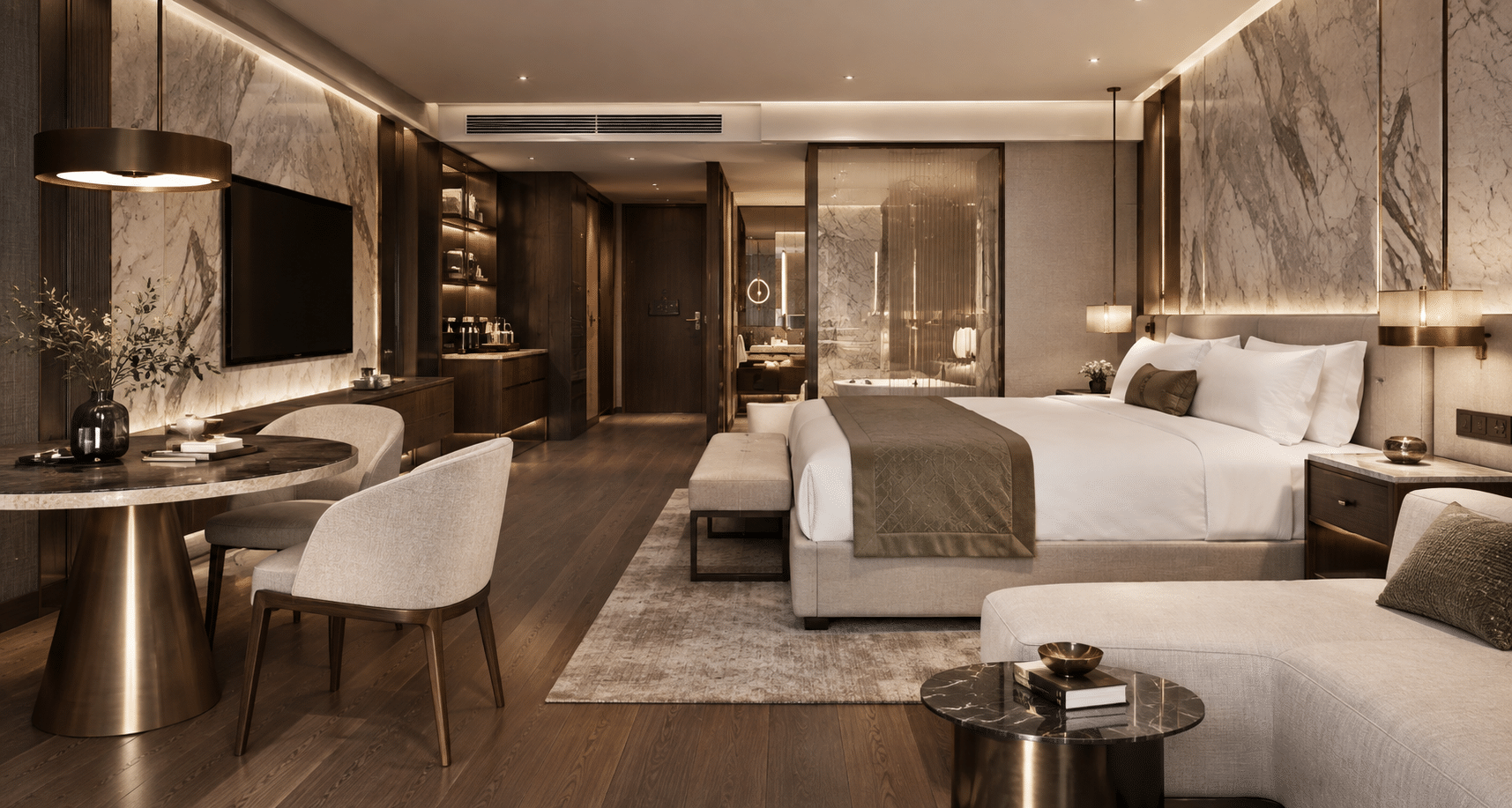
FF&E stands for Furniture, Fixtures & Equipment. It refers to everything inside a hotel that is not physically attached to the building itself. Think of it this way: if you picked up a hotel and turned it upside down, everything that would fall out is FF&E.
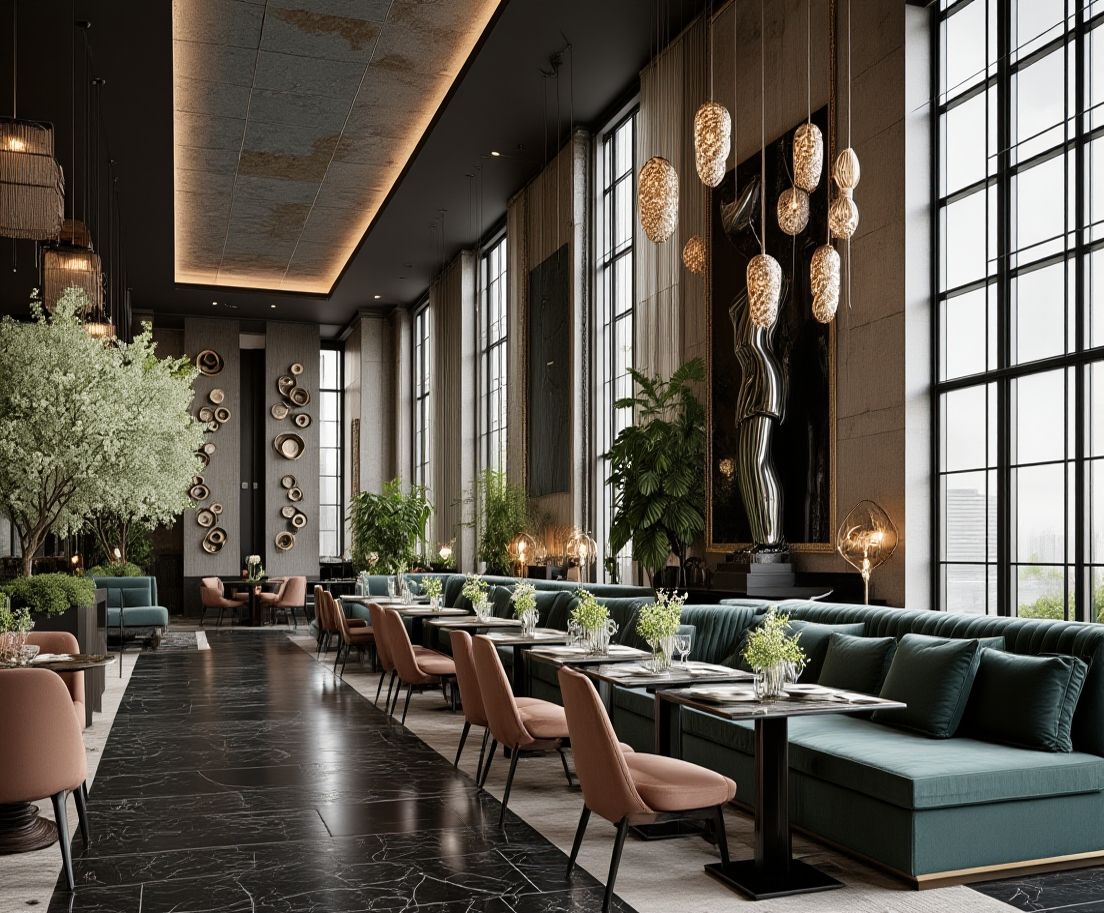
That includes the beds, desks, chairs, sofas, lamps, mirrors, minibars, curtains, rugs, artwork frames, and bathroom accessories in every guest room. It also covers the lobby seating, restaurant tables, poolside loungers, reception desk furniture, and the gym equipment. Basically, anything a guest can touch, sit on, sleep on, or use.
You will also hear the term OS&E Operating Supplies & Equipment which covers the operational items like linens, crockery, glassware, kitchen equipment, and cleaning trolleys. Often, FF&E and OS&E are managed together under the same procurement process.
On a full hotel project, FF&E typically represents 15 to 35% of the total development budget — which makes it one of the largest single cost categories after construction. Getting the sourcing right has a meaningful impact on the overall project cost.
Q02
Why do so many hotels source their furniture from Asia?
There are three main reasons, and they tend to work together: quality of craft, access to materials, and cost efficiency.
Countries like Indonesia, Vietnam, Malaysia, and China have decades of furniture manufacturing experience, particularly in natural materials like teak, rattan, and reclaimed wood that are in high demand for boutique and resort-style hospitality projects. The craftsmanship in these markets especially for custom, handmade pieces is genuinely world-class, and has been for generations.
On the materials side, Asia sits close to some of the best managed timber and natural fiber resources in the world. This is not just about cost it is about proximity to materials that give hotel interiors a specific warmth and character that is very difficult to replicate with engineered alternatives.
7.6% Projected annual growth rate of the Asia Pacific hotel FF&E market through 2033 — the fastest-growing region globally for hospitality sourcing.
Not all Southeast Asian manufacturers are the same. The country of origin matters less than the specific factory’s capabilities, certifications, and track record with hospitality-grade specifications. Always ask for hospitality project references, not just general portfolio work.
Q03
How long does it actually take to get hotel furniture produced and delivered?
This is the question that catches most first-time buyers off guard. The honest answer for custom hotel furniture sourced from Asia in 2026 is: plan for 20 to 28 weeks from order confirmation to arrival on site. Here is how that breaks down:
- Sampling and approval: 3–5 weeks to produce, review, and approve physical samples before full production begins
- Full production: 12–16 weeks for custom casegoods (bedroom furniture, storage, desks); 8–12 weeks for upholstered pieces; 6–10 weeks for simpler items
- Quality inspection and packing: 1–2 weeks at the factory before goods are released for export
- Ocean freight: 3–6 weeks depending on origin port and destination (Southeast Asia to the Middle East or Europe)
- Customs clearance and last-mile delivery: 1–2 weeks on the receiving end
Add those together and you are looking at roughly five to seven months for a complete FF&E scope. If your hotel opens in six months and you have not started procurement yet, you are already in a difficult position.
Suppliers who quote short production times without asking for your full specification. A realistic timeline depends on what you are actually ordering. “12-week delivery” on a catalogue item is very different from “12-week delivery” on 200 custom-made guest room wardrobes.
Q04
What makes hotel furniture different from regular furniture? Can I just buy from a normal supplier?
You can but you will usually regret it within the first year of operation. Hotel furniture is designed to be used by hundreds of different people, every day, for eight to ten years before it is replaced. Residential furniture is designed to be used by one household, occasionally, for a similar period. Those are completely different engineering briefs.
Hospitality-grade furniture is built to specific standards that residential pieces are not. This includes fire resistance ratings for foam and upholstery fabric (required by most hotel brand standards and building codes), structural load testing on chairs, beds, and casegoods, surface durability that withstands daily cleaning with commercial-grade products, and joinery strength that holds up under constant use without loosening.
In coastal or humid environments like Southeast Asia, the Middle East, or tropical resorts, this becomes even more important. Materials and finishes that work perfectly in a dry European apartment can corrode, warp, or degrade quickly in a beachside hotel — often within 18 months.
The difference between hospitality-grade and residential-grade furniture is not immediately visible. It shows up in year two, during the first refurbishment cycle and by then, the cost of replacing it far exceeds what was saved at procurement.
Ask your supplier specifically about foam density ratings, joinery type (mortise-and-tenon vs. dowel vs. cam lock), and the finish system used on any wood surfaces. A supplier who can answer these questions without hesitation is working at the right level of technical knowledge for hospitality work.
Q05
How do I know the quality will be consistent when I can’t be at the factory every day?
This is one of the most legitimate concerns in cross-border sourcing, and the honest answer is: you need a structured quality control process, not just a trusted relationship. A good supplier relationship helps, but it is not a substitute for documented inspection at the right stages of production.
A proper quality control process for hospitality FF&E has at least three stages:
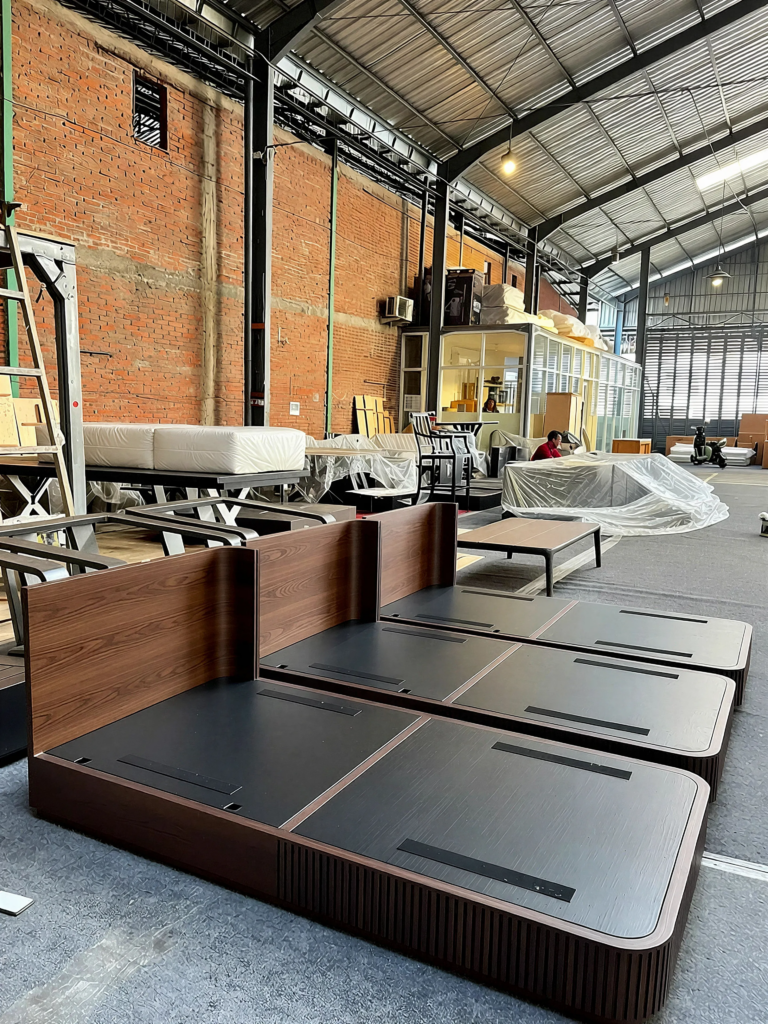
- Pre-production check: Materials are confirmed against specification before cutting begins — wood species, fabric batch, hardware grade. This prevents the most common problem: production starting with the wrong materials.
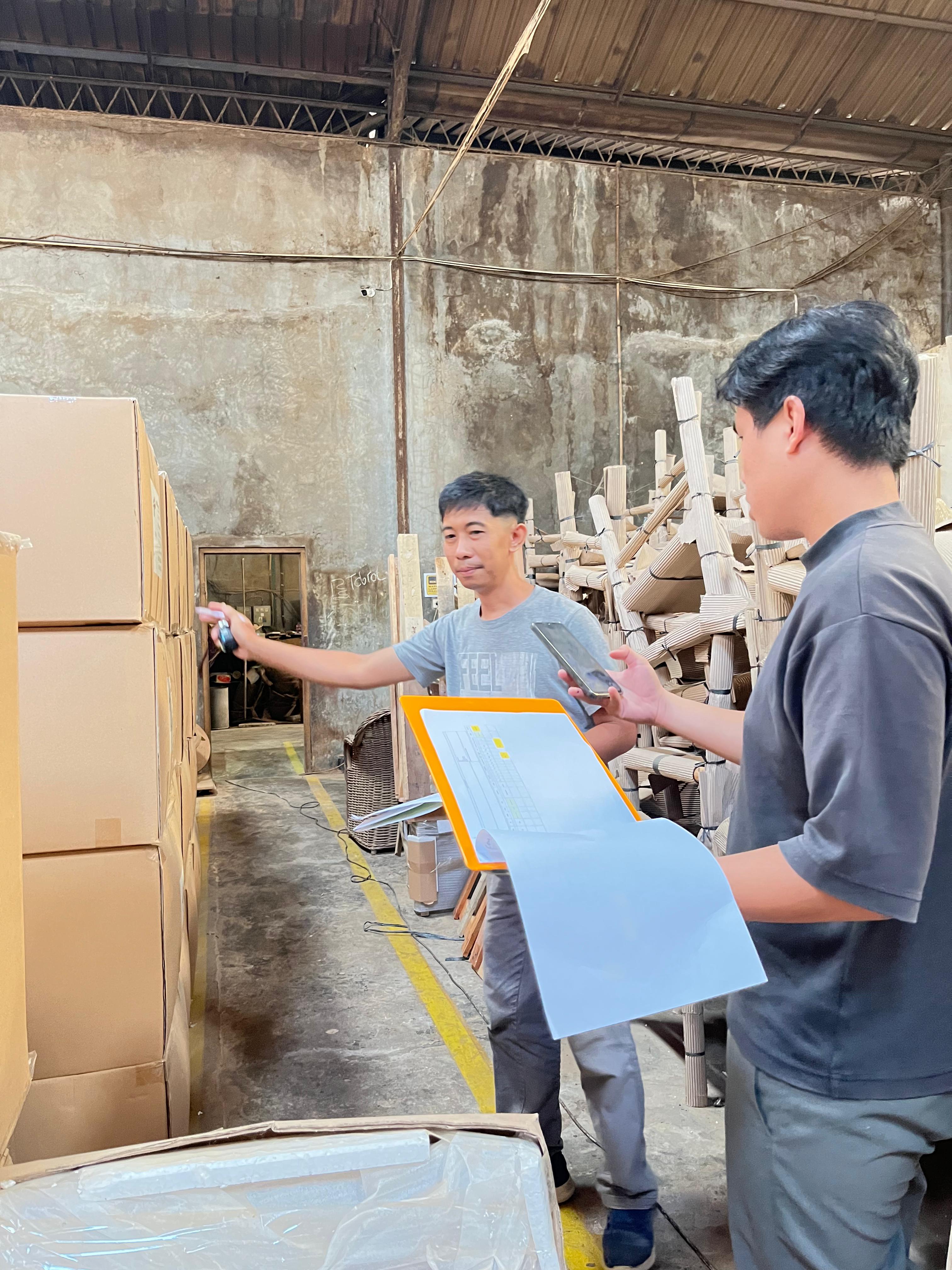
- During-production check (inline inspection): Typically at the 30–50% completion mark, an inspector reviews work-in-progress pieces for dimension accuracy, finish consistency, and structural integrity. Problems found here are cheap to fix. Problems found on delivery are not.
- Pre-shipment final inspection: A full check of finished goods against the purchase order — quantities, dimensions, finishes, packaging, and labelling — before the container is loaded. This is the last opportunity to catch and address defects before the cost of a mistake becomes your problem.
Ask your sourcing partner or supplier to share their QC reports after each stage not just a summary, but the actual inspection documents with photographs. If a supplier is not producing written QC records, quality is not being managed systematically, regardless of what they tell you in meetings.
Any arrangement where the only quality check is a phone call with the factory. Self-reported quality by the producer is not quality control — it is wishful thinking.
Q06
What does “custom” actually mean in hotel furniture — and is it worth it?
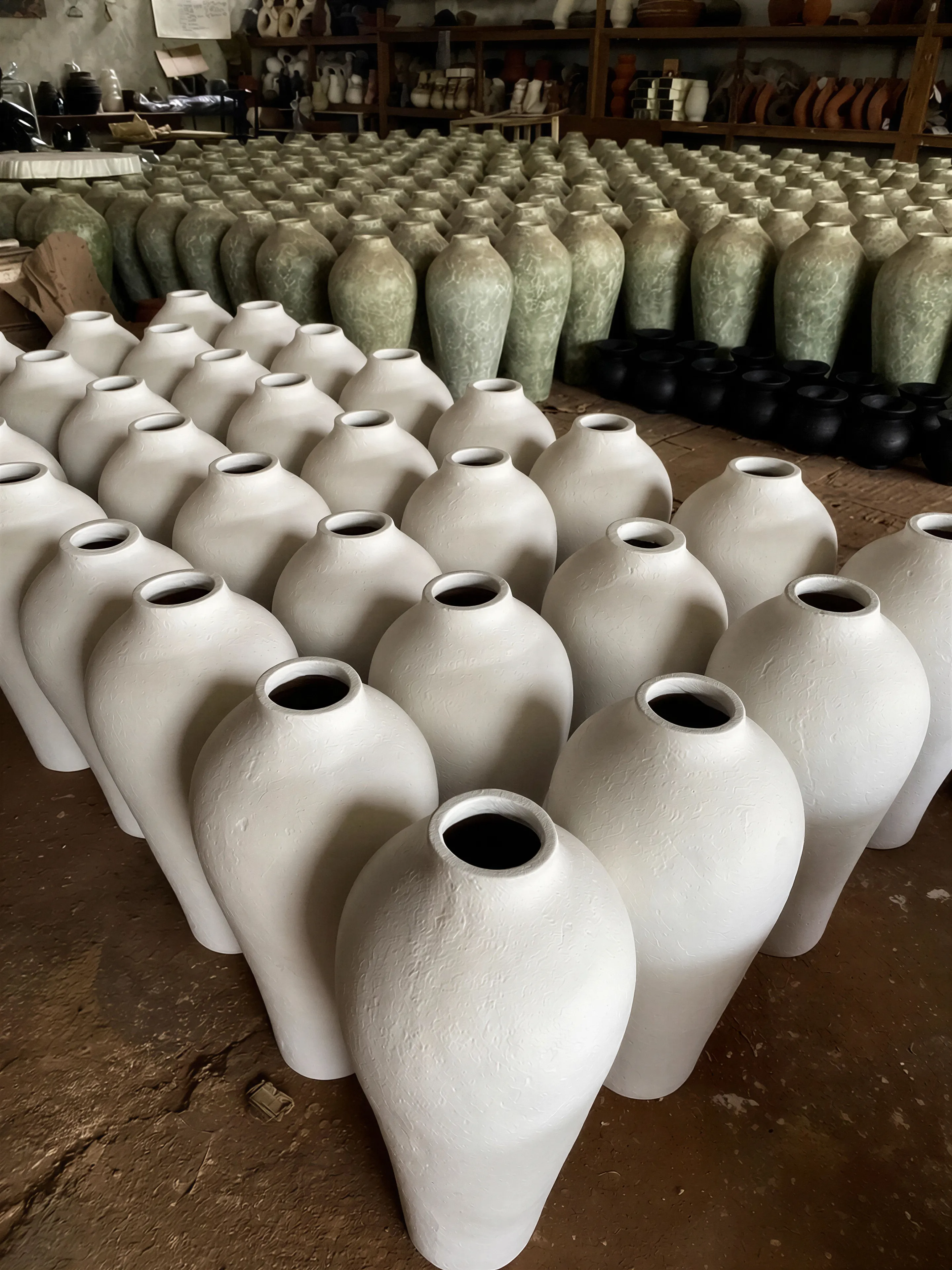
In the context of hotel FF&E, “custom” can mean anything from a minor modification (a different leg finish on a standard design) to a completely original piece designed from scratch. The distinction matters because the cost, lead time, and minimum order quantity are very different for each.
When a designer or brand says they want “custom” furniture, they usually mean one of three things:
- Modified standard: An existing design adapted in dimensions, material, or finish. This is the fastest and most cost-efficient form of customisation — typically adding 2–4 weeks to a standard lead time.
- Semi-custom: A new design developed from the hotel’s brief, using standard materials and construction methods. This requires a full sampling process (3–5 weeks) before production begins but gives a much higher degree of design control.
- Fully bespoke: Original design with specific materials, non-standard construction, or handcraft techniques. This is the most expensive and time-consuming option — typically 18–24 weeks from design brief to production approval — but produces genuinely distinctive results for luxury and boutique properties.
Is custom worth it? For most hotel projects above the midscale tier, yes because the furniture is a significant part of the guest experience, and off-the-shelf pieces designed for the mass market rarely fit a specific brand identity well. The question is which level of customisation your budget, timeline, and brand standards actually require.
Always request a physical prototype (called a “mock-up room” in the industry) before full production begins on any custom scope. This is a fully fitted sample room using production-intent furniture, finishes, and accessories. It is the single most effective way to catch specification problems before they are multiplied across 100+ rooms.
Q07
My hotel brand is pushing for sustainable sourcing. What does that actually require?
Sustainability in hospitality procurement has moved from a nice-to-have into a documented requirement — and the documentation part is where most projects struggle. It is no longer enough to say “we use sustainable materials.” You need to be able to prove it.
In practical terms, sustainable sourcing for hotel FF&E typically requires some combination of the following:
- FSC certification for any timber used in furniture — this certifies that the wood comes from responsibly managed forests, with a chain-of-custody document that traces it from forest to finished product
- OEKO-TEX certification for fabrics and upholstery — confirming that the textiles have been tested and are free from harmful substances
- Recycled content specifications for metal, plastic, or composite components where applicable
- Supplier ESG credentials — evidence that your manufacturer operates responsible labour and environmental practices
- Scope 3 emissions data for hotel groups required to report under frameworks like CSRD (primarily relevant for European markets in 2026)
The critical thing to understand is this: the claim is only as good as the document behind it. If your sourcing partner cannot provide the actual certificates, chain-of-custody records, and supplier audit documentation, you cannot make the sustainability claim in a brand standard or investor report no matter how credible the supplier seems.
Sourcing from Asia does not compromise your sustainability position — in fact, when you are buying direct from certified manufacturers, you can often demonstrate a cleaner chain of custody than buying through multiple European distributors. Fewer intermediary steps means fewer points where documentation gets lost.
Q08
How does shipping and logistics work for hotel furniture and what costs am I not seeing in the initial quote?
This is where a lot of first-time buyers get an unpleasant surprise. The price a factory quotes you whether they call it FOB, EXW, or just “factory price” is almost never the amount you will actually pay by the time your furniture arrives on the hotel loading dock.
Between the factory gate and your delivery point, there are typically several additional cost layers that need to be budgeted for:
- Export packaging and labelling: Specialist protective packaging for furniture in ocean containers — significantly more robust than standard packaging
- Origin freight and handling: Moving goods from the factory to the port of loading
- Ocean freight: The container shipping cost itself — highly variable depending on route, container size, and market conditions
- Marine cargo insurance: Usually 1–2% of cargo value, but essential for any significant shipment
- Import duties and taxes: Varies significantly by product type and destination country — can be 0% or can be 25%+
- Port handling and customs clearance: Agent fees plus any inspection or documentation requirements
- Inland delivery to site: From the arrival port to the hotel location — often forgotten entirely in early budget estimates
- Damage contingency: Even with good packaging and handling, some breakage and damage occurs in transit. A 2–5% contingency is realistic.
In total, these additional costs commonly add 20 to 40% to the factory-quoted price, depending on the destination country, product category, and shipping conditions at the time of booking.
Any supplier who gives you a total project cost estimate without including these logistics layers — or who provides a “landed cost” figure without being able to itemise exactly what is included. Ask for a breakdown. If they cannot provide one, the number is not reliable.
Q09
Should I work with one supplier or use multiple different vendors for different categories?
Both approaches work. The question is what you are equipped to manage, and what the consequences of a coordination failure look like on your project.
The case for multiple vendors: you can pick the best specialist in each category the best mattress manufacturer, the best casegoods factory, the best upholstery house and potentially get a lower unit price on specific items. This works well when you have an experienced procurement manager who can dedicate significant time to coordinating across suppliers, managing different timelines, and holding each party accountable independently.
The case for a single-contract principal supplier: one commercial agreement, one quality framework, one delivery schedule, one point of accountability when something goes wrong. The procurement team manages outcomes not vendor relationships. When a delay or defect occurs, there is no discussion about whose scope it falls under. One party owns it.
The risk in multi-vendor sourcing that is often underestimated is cascade failure: if one supplier’s delivery slips by three weeks, it can delay installation across the whole hotel, push back the soft opening, and generate losses from delayed revenue that far exceed any per-unit savings achieved at the procurement stage.
60% of hotel project delays trace back to procurement and supply chain management problems not construction or design issues.
Practical Tip
If you choose a multi-vendor approach, build a master delivery schedule that covers every supplier, with a single person on your team responsible for tracking it. The coordination burden is real, and if it falls to no one in particular, it effectively falls to everyone — which means it does not get managed properly.
Q10
When should I actually start the sourcing process for my hotel project?
Earlier than you think. The single most common and most expensive mistake in hotel FF&E procurement is treating it as a finishing task something to handle once the architecture is locked and construction is underway. By that point, you have almost always lost the lead time you needed to source correctly.
Here is a simple rule of thumb based on industry experience: begin your sourcing process 12 to 18 months before your intended soft opening date. That timeline allows for:
- A full supplier selection and RFP process without rushing to the cheapest available option
- Physical sampling and design approval before committing to full production quantities
- A mock-up room review if the project scope and budget warrants it
- Full production run with proper quality control at each stage
- Ocean freight, customs clearance, and site delivery with adequate buffer time
- Room-by-room installation and snagging before handover
If you are planning a hotel renovation rather than a new build, the timeline pressure can be even greater — because delivery has to be coordinated around active hotel operations, floor by floor, without the ability to deliver everything at once to a staging area.
The Right Time to Start
The best moment to begin a sourcing conversation is when you have a confirmed design brief and room count — not necessarily final drawings. A good sourcing partner can begin scope planning and supplier engagement with that level of information, which is exactly what protects the timeline.
If You Are Already Late
If you are reading this with less than nine months until your opening, you still have options but they narrow. Be honest with your sourcing partner about the timeline from the first conversation. The worst outcome is discovering the constraint at the point of order confirmation when there is no longer any flexibility in the production schedule.
Sourcing well is one of the most impactful decisions you will make for your hotel project.
The questions in this guide are ones we hear regularly from developers planning their first hotel, from experienced project managers who want a second opinion, and from interior designers trying to navigate a supply chain they did not design. What they all share is a desire to get it right: the right quality, the right timeline, the right budget, and the right partner to hold it all together.
That is exactly what Asean Sourcing was built to do. As a principal supplier not an agent, not a broker we take full responsibility for sourcing, production, quality control, and delivery across the full FF&E and OS&E scope of a hospitality project. Our manufacturing network spans Indonesia, Vietnam, Malaysia, and China, covering everything from handcrafted teak casegoods to precision-engineered contract upholstery. One contract. One schedule. One team accountable for the outcome.
We do not work with every project that comes through and we will tell you honestly if yours is not the right fit for what we do. But if you are working on a hotel, resort, serviced apartment, or hospitality refurbishment and you want a sourcing conversation that is direct and grounded in how this industry actually works, we would be glad to have it.
Tell us what you’re building — we’ll tell you what’s possible.
Share your project scope, room count, and timeline with us. We will come back with an honest picture of what sourcing looks like for your specific brief no generic proposals, no pressure, just a real conversation about what is achievable.
Related posts
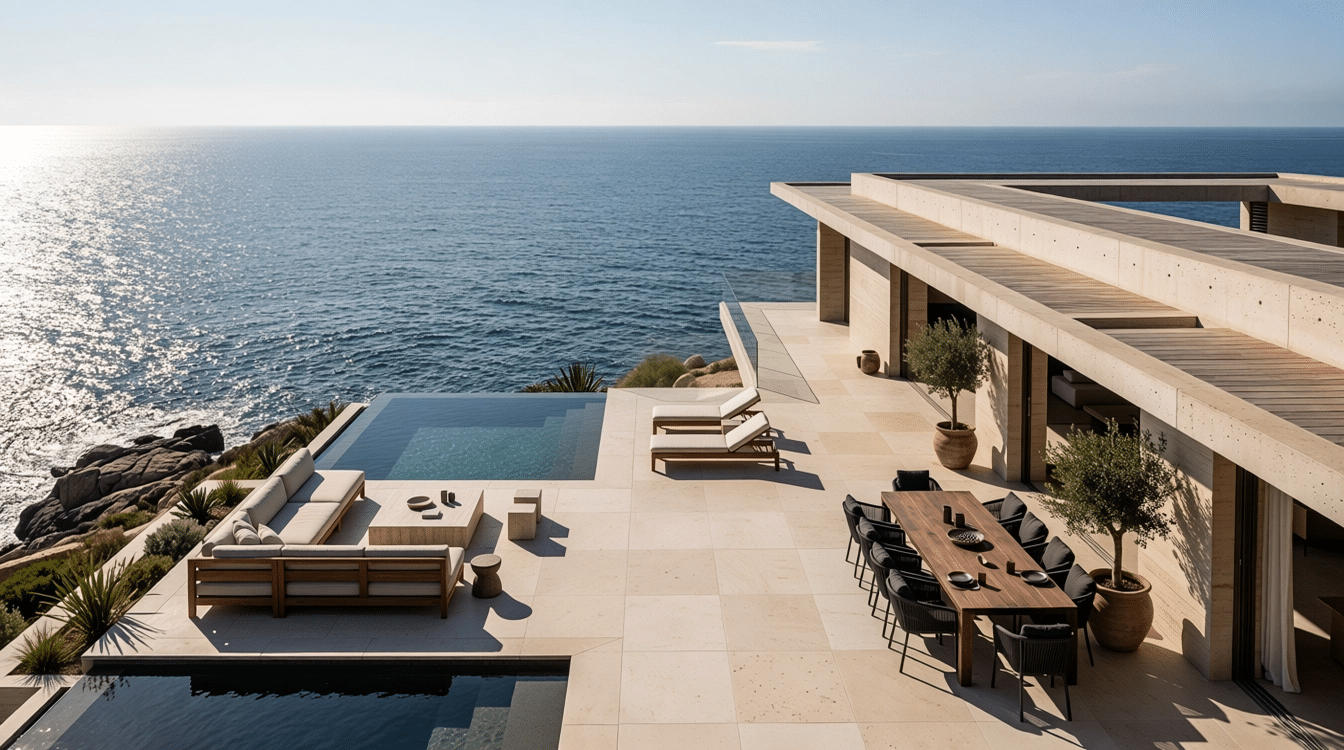
Furniture for Coastal Hotels & Resorts: How to Specify for Salt, Sun and Humidity
A beachfront property tests furniture in ways an inland hotel never will. Salt in the air, hours of d …
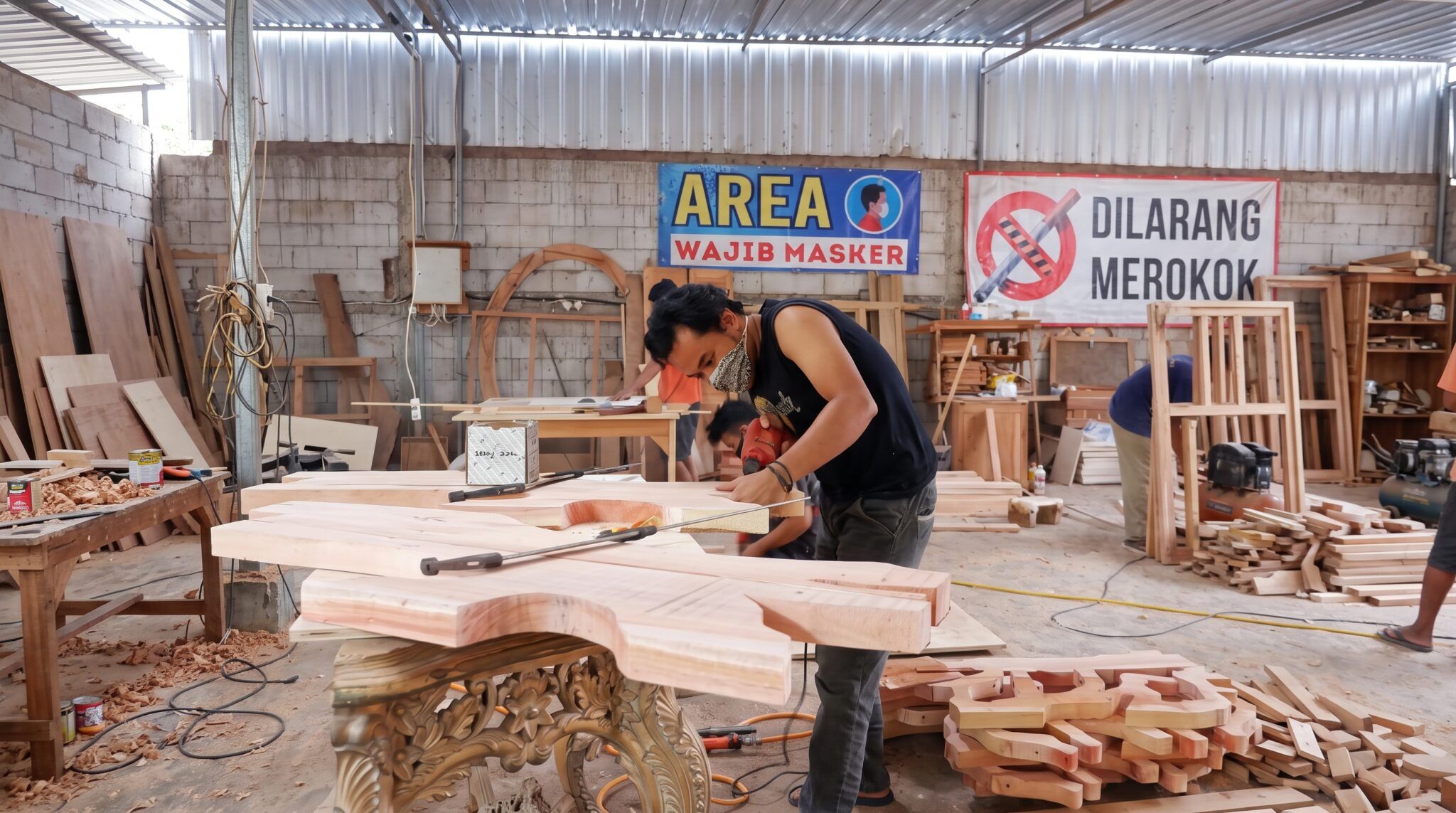
Behind Every Delivery: How We Vet the Furniture Factories You Never See
You see the finished room. Here’s everything that happened before it got there. How do you vet …